
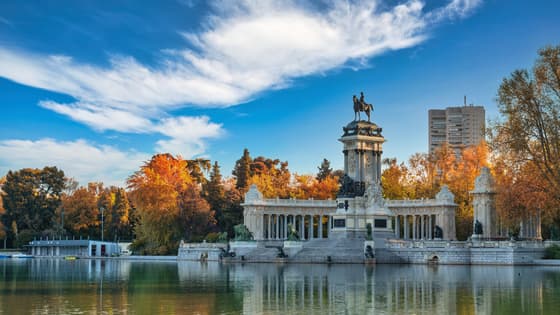
The Spanish capital, Madrid, offers countless reasons to draw tourists to its elegant streets and beautiful squares. An ancient, regal city and a hub of profound, centuries-old culture, it is beautiful in every season, even though the summer and winter weather can sometimes be a bit extreme. Autumn is a wonderful time to rediscover Madrid, thanks to a pleasantly mild climate that is perfect for long walks. The city parks come alive with a spectacular display of red foliage, creating evocative landscapes, while the city center fills with people visiting museums and stopping at charming restaurants to enjoy tapas and hot chocolate. In short, autumn in Madrid offers plenty of opportunities to soak up the vibrant atmosphere of a true capital city, making the season truly special and unforgettable.
Arrival in Madrid
We suggest an idea for a short autumn getaway to the Spanish capital. Three days—a weekend—is just enough time to literally „savor“ the best of the city’s attractions.
You will land at Madrid Airport (MAD), which is excellently connected to the city center, in fact there you can hire a private vehicle with a dedicated driver. This service, which we offer with every comfort, allows you to plan your itinerary exactly as you wish, with the chauffeur at your disposal at all times.
Once you reach your accommodation, drop off your bags and grab a map of the sights to explore around the city!
Day One: monuments and museums
Madrid is a city rich in history, art, and culture. Devoting a full day to its monuments and museums is hardly enough to admire all the beauty the city has to offer, yet it is a „must“ if you are only staying for a few days.
A cultural itinerary in Madrid should certainly begin at the Royal Palace, one of the largest royal residences in Europe. The interiors of the areas open to the public are adorned with artworks, frescoes, and exquisite furniture, offering insight into the history of the Spanish monarchy. Nearby stands the Almudena Cathedral, distinguished by a unique architectural style that blends various elements.
Another iconic Madrid landmark is the Puerta del Sol—one of the city’s most famous squares and home to the celebrated „Bear and the Strawberry Tree“ statue—while no discussion of squares would be complete without mentioning the renowned Plaza Mayor. Surrounded by elegant historic buildings and arcades, this grand square is a popular gathering spot for both tourists and locals.
For art lovers, Madrid boasts some of Spain’s most important museums. The most famous is the Prado Museum, which houses masterpieces by artists such as Velázquez, Goya, El Greco, and Rubens. Another essential stop is the Reina Sofía Museum, dedicated primarily to modern and contemporary art; here, you can view Pablo Picasso’s famous Guernica. Finally, the Thyssen-Bornemisza Museum features an extensive collection spanning from the Middle Ages to contemporary art. Another fascinating structure, the Crystal Palace, is located within Retiro Park—which also includes a beautiful lake—providing a perfect finishing touch to your city cultural tour.
Day Two: nature and red leaves
Autumn colors is one of Madrid’s most fascinating natural phenomena; seeking out the best spots to admire it makes for a wonderful nature-focused itinerary. With the arrival of autumn—between October and November—temperatures begin to drop and days grow shorter. Tree leaves gradually change color, shifting from green to shades of yellow, orange, red, and brown.
In Madrid, the autumn foliage is particularly striking in the city’s large parks and gardens. One of the most famous spots is the Parque del Retiro, a vast green space in the heart of the capital. In autumn, its tree-lined avenues and the area around the lake transform into a landscape of warm hues, creating a vivid contrast with the city’s buildings and streets. The Parque de El Capricho—quieter and less crowded—also offers stunning autumn vistas thanks to its diverse array of trees. Another ideal location for viewing the foliage is the Parque del Oeste, where trees line winding paths, allowing visitors to stroll while fully immersed in nature. The Real Jardín Botánico (Royal Botanical Garden), located near the city center, is another interesting destination for those wishing to observe the seasonal transformation of plants up close. For the most beautiful sunsets amidst the autumn colors, however, head to the Parque de Debod.
Madrid’s autumn foliage is more than just a visual spectacle; it offers a unique way to experience the city. Many locals and tourists take advantage of the milder temperatures to go for walks, take photographs, and spend time outdoors. During this season, Madrid reveals a quieter, more evocative side: summer greens give way to autumn colors, and the parks become perfect places to appreciate the interplay between nature and the urban environment.
Day Three: try some excellent cuisine?
Dedicate your final day to another of Madrid’s unique treasures. It is a treasure that doesn’t glitter nor does it smell of ancient dust, yet it stirs the senses and emotions all the same: the local cuisine. Visiting Spain without tasting the delicious dishes of the local culinary tradition simply wouldn’t be right! Spanish food adds color to life—and to your vacation.
Madrid’s gastronomy, in particular, is defined by simple, hearty dishes often rooted in the city’s history and the habits of its people. One of the most famous is Cocido Madrileño, a stew made with chickpeas, meat, vegetables, and other ingredients. Another well-known dish is Callos—a specialty featuring tripe cooked with tomato, paprika, and other seasonings. Bocadillos de Calamares—sandwiches filled with fried crustaceans—are also hugely popular, especially in the taverns of the historic center.
Madrid is also famous for its pastries and sweets; enjoying at least one breakfast featuring them is a must (perhaps at the Chocolatería San Ginés ). Among the most traditional treats are Churros con Chocolate—strips of fried dough served with thick hot chocolate—perfect for breakfast or an afternoon snack. Also renowned are Rosquillas de San Isidro, small ring-shaped pastries prepared in various styles during the festival of the capital’s patron saint. Each type of rosquilla has its own distinct characteristics and flavor; varieties include tontas, listas, francesas, and Santa Clara rosquillas.
In short, Madrid’s culinary scene brings together traditional dishes, simple ingredients, and delicious sweets. Tasting local specialties is a great way to get to know Madrid’s history and culture—and a delicious way to wrap up your short autumn getaway!
