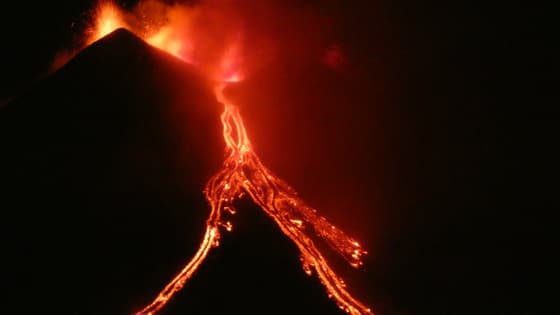
Iceland is known as the land of ice and fire. Indeed, although located in the icy north, this large island has a lava belly and is still in full formation. Iceland was actually born from the meeting of two continents; it is half Europe and half America. And it is the volcanoes that have contributed to the creation of this fascinating world. Talking about volcanoes in Iceland is not easy: there are approximately 130, both active and extinct. Seeing them all, remembering them all, is almost impossible. But if you visit this magical Viking land, make sure to treat yourself to a “volcano discovery tour.” At least, those best suited to the pace and curiosity of tourists.
Icelandic volcanoes: not one, but several tours
Iceland’s volcanoes are so numerous that it’s not easy to create linear itineraries, even if you make a selection right from the start. We therefore suggest you seek guidance from expert local operators to determine whether you’re best suited to a tour of the most recent volcanoes, the most famous, or even if it’s worth admiring them… from the inside! There are so many options! And so are the means of transport you use to reach them, almost always equipped jeeps or even helicopters! ALWAYS rely on expert guides, preferably volcanology guides. Volcanoes are never “just mountains”… . After landing at Keflavik Airport (KEF), the main airport serving the capital Reykjavik, find out about tour options to these incredible places.
The Big Nine
The Big Nine are the island’s most famous volcanoes. They follow a semicircular map that essentially “walks” along Iceland’s great continental divide. In order to visit them all, you’ll need multiple means of transport and, above all, several days.
You’ll see:
- Mount Eyjafjallajökull, also called “the Icelandic volcano” because no one could pronounce its name (by the way, it’s pronounced “eiafiat’la’ioekùlli”), which became world famous in 2010 after its mega-eruption darkened the skies of Europe for months! However, Eyjafjallajökull has had notable eruptive periods in the past, in the 9th, 17th, and 19th centuries;
- Thríhnúkagígur, a giant so high it could hold several skyscrapers stacked together. A giant that sleeps, however, perhaps forever. And for this reason, its craters don’t smoke but, on the contrary, are teeming with tourists who descend into its bowels via modern elevators;
- Grímsvötn, which is actually not a single volcano but an entire family of eruptive cones. And they are as active as they are unpredictable. If you want to explore this volcanic system, you definitely need a dedicated guide;
- Mount Katla, the ice-covered volcano that, if it were to erupt again, could cause dramatic situations;
- Mount Hekla, a “she-volcano” here perceived as a beautiful woman. Hekla, however, knows how to hurt, and for this reason it is among the most monitored. But being also the most active, it is a constant draw for tourists;
- Snæfellsjökull, “the Beautiful,” is one of the most photographed and loved by international tourists. Not only for its shape but also for the natural landscapes around it. Many artists and photographers have used it to forever remember what primordial Earth was like;
- the terrible Askja, which rarely erupts but when it does, endangers the entire island: today, its caldera is covered by a glacial lake;
- the vibrant Krafla, which experiences numerous periods of continuous activity and others of peace and is characterized by the presence of a sulfurous lake at the bottom of its main crater;
- Hverfjall is a volcano that erupts every three or four millennia! Accessible and easy to explore, it only takes an hour to experience its full beauty.
Possible itineraries among Iceland’s volcanoes
With these nine volcanoes alone, you can choose from numerous itineraries. One itinerary could take you to discover the most famous volcanoes, such as Eyjafjallajökull, Snæfellsjökull, and Hekla—as well as the newborn volcano that arose on the Blue Lagoon fault not far from the capital, Reykjavik. Another itinerary could focus on the volcanoes of the Grímsvötn system, fascinating yet dangerous if visited without an expert guide. Or perhaps you’d prefer to calmly admire the extinct or dormant volcanoes, such as Hverfjall, Askja, and Krafla. Finally, you could decide to thoroughly explore the magma conduits of the sleeping giant Thríhnúkagígur.
The more courageous may want to experience the thrill of an eruption up close and choose to take an “eruptive” tour of currently active volcanoes or fissures. In that case, trust your guide of course, but remember that Icelanders’ perception of volcanic danger is different than ours. For them, admiring the lava up close is a “must”, and it’s an adult choice; therefore, any accidents or injuries will NEVER fall under the guide’s responsibility.