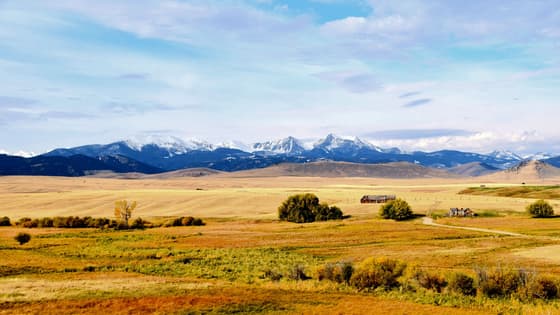
There are vacation spots chosen for reasons other than the pursuit of cool air or a tan: they are places that have inspired stories, novels, or hosted great writers while they created their works. These places usually serve as starting points for literary itineraries that can also become a pleasant and fun vacation, perfect for a special summer. Here we tell you about an itinerary in the footsteps of ancient pioneers, following the story of a little girl with braids: Laura from “Little House on the Prairie.”
Successful novels little-known in Europe
The book series known as “Little House on the Prairie” is composed of a series of novels (nine, plus subsequent short stories derived from them) written from 1933 to 1957 by the American novelist Laura Ingalls Wilder, which recounts her childhood and youth at the height of colonial expansion into the “Wild West”. Territories and events often linked to the cruel world of cowboys and Indian warfare are seen here through the eyes of a little girl who faces them, along with her sisters and friends, thanks to the wholesome values imposed by her family.
The last book in the series, paradoxically titled “The First Four Years,” was published in 1971—fourteen years after Laura’s death—by Roger Lea MacBride, curator of the estate of Ingalls Wilder’s only daughter, the journalist Rose.
While these books were a literary success in the United States and Canada and are still among the most popular texts for early childhood education, they have only been published in Europe for a few years. Laura Ingalls Wilder’s story became famous here in the 1980s, following the successful television series created by Michael Landon. Revivals and new Netflix series have also finally brought the original novels to bookstores.
The Little House on the Prairie Itinerary
The locations in the “Little House on the Prairie” series are in the United States. The tour begins in Wisconsin and ends in Missouri, enormous distances that require several weeks of travel or, alternatively, several specially planned trips. Whichever option you choose, you’ll experience the same thrills you may have already experienced with the TV series. And will live it again in the newly published books.
The heart of the itineraries remains the town of Walnut Grove (Minnesota), where one of the novels is set but where the entire television series has its root. In this town, you can visit a museum dedicated to the novels of Laura Ingalls Wilder and her family. Another unmissable stop is Mansfield, Missouri, where you can still visit the home of Laura and her husband, Almanso; there they spent their old age until their death. We detail the various stops on the “Little House on the Prairie” itinerary, along with their reference airports and places of interest.
Pepin, Wisconsin
Here begins the expansive plot of Ingalls Wilder’s novel. In Pepin, on the edge of the region known as the “Big Woods” her parents, “Pa” (Charles Ingalls) and “Ma” (Caroline Quiner), lived and met. Pepin is the heart of the first novel “The Little House in the Big Woods”, and although the town is part of the state of Wisconsin it is most easily reached from the St. Paul Minneapolis Airport (MSP), an hour’s drive away. In Pepin you can admire, on the exact spot where the writer was born, a replica of the house that Laura Ingalls Wilder’s father actually built in the 19th century.
Nearby, you can enjoy beautiful nature on the shores of Lake Pepin or in the Tiffany and Five Mile Bluff nature reserves. About a two-hour drive from Pepin, you shall visit the cities of Rochester and Mankato, with their long-standing traditions linked to the Native American tribes of the Dakota.
Montgomery County, Kansas
Laura’s story continues, strangely, in the third book of the series because the second, “The Farmer Boy” was added by the author solely to recount the life of her husband, Almanso Wilder, originally from New York state. This parenthesis creates a sort of time jump, returning to Laura’s childhood in the book “Little House on the Prairie”—which would later give the entire series its name.
The Ingalls family’s story continues in southern Kansas, in the Montgomery County region, now served by a small regional airport accessible via connecting flights from Denver (DEN) in neighboring Colorado. In addition to yet another museum dedicated to the Ingalls family, the county also boasts a Safari Zoo populated with crocodiles, the Stone Shelves… rock formations along the Elk River, and Elk Lake.
Itinerary steps in Minnesota
Following the Ingalls family’s constant relocations, your itinerary will enter the state of Minnesota to visit Walnut Grove (which we’ve already mentioned) and Plum Creek Lake, near which the writer lived for most of her childhood. Today, Plum Creek Park is a protected reserve where you can enjoy long walks and boat rides on the Plum Creek river and lake. This is where the fourth novel, “On the Banks of Plum Creek”, and part of the fifth book, “On the Banks of Silver Lake”, take place.
With a half-hour drive from Walnut Grove, you can visit a fascinating site called The Lakes, where five lakes intertwine amidst lush woods around the larger Lake Shetek. A two-and-a-half-hour drive will take you to Minneapolis and its neighboring twin city, the capital, St. Paul.
What to visit in the Dakotas?
The book “On the Banks of Silver Lake” ends with the Ingalls’ umpteenth relocation, this time to the Dakota Territory, which at the time was still almost entirely in the hands of native tribes. Laura and her family lived in De Smet, a town now in South Dakota that boasts several old pioneer-style homes attributed – as for building – to Laura’s father. The De Smet Cemetery is a stop on the tour because many members of Laura’s family are buried there. Two lakes, Lake Preston and Lake Thompson, lie near De Smet.
South and North Dakota—where the following books, “Little Town on the Prairie” and “These Happy Golden Years” about the love story of Laura and Almanso, are also set—are still places rich in Indian roots. The Dakota Territory, where Laura also set her novel “The Long Winter”, now encompasses both states, and you can still visit large Native American communities such as Standing Rock, Cheyenne River, and Fort Berthold. Both Dakotas are served by many smaller airports that also receive domestic flights from St. Paul and Chicago O’Hare (ORD).
Mansfield, Missouri
The author’s final posthumous book recounts the final years of her life with her husband in their home in Mansfield, Missouri, which can still be visited today. Laura and Almanso’s graves are located in the local cemetery. Served by a local airport with connections from all major Midwest hubs, Mansfield is an hour-and-half drive from the large national park dedicated to the writer Mark Twain, who lived here and set some of his adventure novels. A three-hour drive north, if you can, will take you to the unique city of Kansas City, a large urban center split by the Missouri-Kansas border line!