
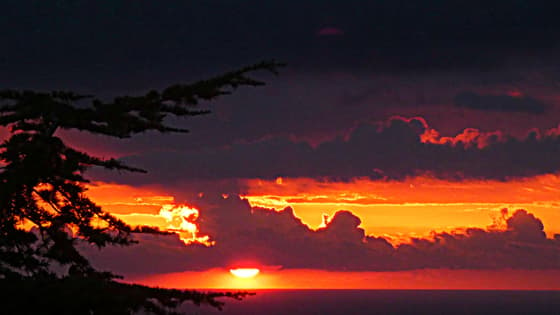
If you’re craving romance and beauty, we suggest a “sunset stroll” along a particularly captivating coastline: the one stretching from the Italian region of Friuli-Venezia Giulia to northern Croatia. Between the golden sea and mysterious mountains, where ancient and modern history intertwine, you’ll enjoy captivating experiences and unforgettable memories. For this itinerary, we suggest arriving at either Venice Marco Polo Airport (VCE) or Rijeka Airport (RJK), then traveling to your destinations in Italy or Croatia using our private transfer options with a driver.
Lignano Sabbiadoro
If you begin your itinerary in Italy, after landing in Venice, your first stop will be Lignano Sabbiadoro, just over 100 km from the airport.
Unlike the crowded and exclusive Lido of Venice, Lignano is a beach for everyone. As large and beautiful as Venice, it overlooks a very similar lagoon. The city is modern and recent, so it has very few noteworthy monuments (the small 15th-century church of Santa Maria del Mare, dismantled from the riverbank in Latisana and reassembled piece by piece in Lignano to save it from flooding, is interesting!). However, the magic of the lagoon makes up for what it lacks in art and history.
The sunsets from Lignano are a marvel… but even more beautiful are those you’ll see from Grado, a medieval town less than an hour’s drive from the Lignano shore, overlooking the same lagoon. From here, another short journey takes you to the Karst plateau, the last sliver of Italy before Eastern Europe.
The Karst
The Karst is a plateau located atop a range of rocky hills. The soft rock has been carved out over centuries by underground streams that have once seen much blood flow. Several wars have been fought on the Karst Plateau, and traces of those tragedies can still be seen today amid the lush vegetation and autumn colors.
The Karst Plateau embraces and watches over Trieste with a network of stunning caves (the Giant’s Cave, the Cave of the Towers of Slivia, the Škocjan Caves, and the world-famous Postojna Caves). Admiring the sunset from the panoramic points of the Monrupino Sanctuary and the Duino Cliffs Reserve offers unique emotions, with views of Trieste and the sea at your feet.
A symbolic city of the Karst Plateau, Trieste is beautiful and rich in history, with many fascinating itineraries that will lead you to discover medieval monuments such as the Cathedral of San Giusto, the Synagogue, or the “Austro-Hungarian” wonder of Unità d’Italia square… a sequence of elegant neoclassical palaces overlooking the sea, or the delightful cafes and noble villas (most notably, Miramare Castle).
Koper and Izola
From Italy, chasing sunsets over the Adriatic, you enter a small portion of Slovenia that acts as a buffer zone before arriving in Croatia. Here, your itinerary will stop in Koper and Izola.
Koper is Slovenia’s main port, but it feels more like a jewel than a port city. It still retains medieval Italian architecture and is a triumph of stone and terracotta, complemented by discreet beaches and a lively waterfront. Strolling through Koper, you can admire the Palazzo della Loggia, the Palazzo Pretorio, the Rotonda dell’Assunta church (11th century), the cathedral, the colorful houses of Piazza Carpaccio—so similar to Murano, but without the canals—and enjoy local delicacies (especially ice-cream!) in the small cafes of the old town.
To admire the most beautiful sunsets, climb to the panoramic viewpoint overlooking the nearby town of Izola. To be precise, reach—by public transport, bike, or on foot—the top of Višta Parenzana, from which you can look out over the rooftops of the town center, the open sea, and the setting sun. Izola’s town center will spoil you with Venetian-style buildings, ancient medieval churches, and small clubs that come alive at night with interesting events.
Rovinj
Continuing along the coast, you enter Croatia and must stop in Rovinj. A medieval city with ancient Italian heritage, it seems to have fused the beauty of Tuscan villages (the vertical, pastel-colored houses) with Venetian opulence (the bell tower of Santa Eufemia, so similar to that of San Marco) and the romanticism of Ligurian towns. Rovinj “plunges” into the sea and looks directly west, offering some of the most beautiful sunset views on the Adriatic. Near the city center are five archaeological sites dating back to the Roman and Bronze Ages.
Pula
Rovinj and Pula are only 40 kilometers and a 45-minute drive away. Once you cross the city limits, you’ll find yourself in an artistic marvel… the “Croatian Rome.” Pula’s historic center centers around the large Arena, which remains virtually intact. But beyond that, the Arch of the Sergii and the Temple of Augustus still tell the story of Rome’s past in this corner of Europe. Remains of Roman villas and altars can be found scattered around the city. Dinosaur skeletons can be found in the area known as Valle. The most beautiful places to admire autumn sunsets from Pula are the beaches of Valsaline, Galebove, and Stoja. You could also treat yourself to an experience at the Brijuni Island Safari Park, located right in front of Pula and offering equally unique panoramic views.
Rijeka
If Pula is a bit like the Rome of Croatia, Rijeka is a small local Florence! Proud, rich in art, and beautiful for the elegance of its churches and palaces, Rijeka in autumn is a place with much to offer. Perhaps not so much the sunsets, given that it faces south and has several islands in front of it, but there is no shortage of breathtaking itineraries that start from here.
The Civic Tower is one of the city’s most emblematic symbols, but the Roman Arch, the Civic Walls, and St. Vitus Cathedral are equally worthy of note. Also worth visiting are the ancient mills on the Aeneas River, the Military Tunnel (Tunnel-Ri) dating back to World War II, the local markets, and the museums.
Nearby, be sure to explore small towns steeped in centuries-old history, such as Porto Rei, Shmirka, and Omišalj.
