
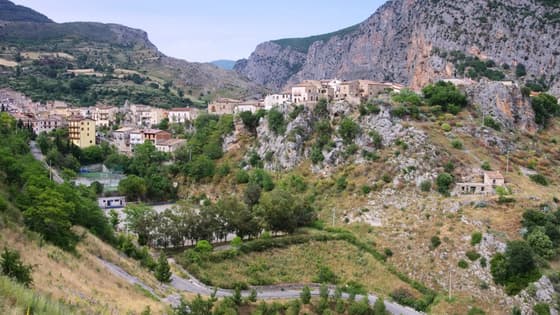
Albania is very trendy today, and its culture and flavors attract the interest of many tourists who book flights to Tirana Airport (TIA) just as they once did to Bali or the Maldives. But if you enjoy these traditions and still don’t want to give up the beauty of Italy, try combining the two. How? By choosing a different kind of vacation, in the many Arbëreshë communities of southern Italy. From Sicily to Molise, there are many “Albanian” places to choose as your resting place, and the good news is that almost all of them are just steps from the beach! We shall suggest a few for you to consider. But first, let’s tell you who the Arbëreshë are.
The Albanian refugees who built Italy
The Arbëreshë, or Italo-Albanian, communities arrived at different times in history, but all shared the same fate: that of refugees! The first waves of migration from Albania reached Italy in the 15th century, after the death of the hero Scanderbeg and the conquest of the land by the Turkish enemies. Other waves of Albanian migrants arrived in the 18th century, then at the beginning of the 20th century, and finally in the 1960s and 1990s.
These refugees usually joined communities that spoke their language, which is why these small corners of Albanian tradition have survived over time, despite being surrounded by Italian culture. And it is also thanks to the Arbëreshë and their determination and skill as artisans that many Italian economic activities have not been lost. We owe them a debt. Today, many Italian-Albanian towns live off tourism, because they preserve their own traditions that make them unique and fascinating. Would you like to visit some of them?
Arbëreshë in Sicily
Landing at Palermo Airport (PMO) is a short drive to Piana degli Albanesi. This town bears its Arbëreshë history in its name (the Albanian Valley), and its medieval historic center has retained all the flavors of this culture: churches such as the cathedral, or St George Megalomartyr, the Odigitria, St Anthony the Great, and the Sclizza are just a few examples… along with many street names dedicated to Albanian saints and heroes. The fountains are another point of pride on the Piana itinerary (there are at least twenty of rare beauty), as are the archaeological site of Pirama and Lake Piana. Not far from this town is Portella della Ginestra, linked to a dramatic massacre of farmers immediately after World War II.
Piana degli Albanesi is less than one hour’s drive from stunning beaches such as Balestrate and Scopello.
Calabria: kingdom of the Arbëreshë
Calabria is the region with the highest number of Arbëreshë towns in Italy. Dozens of small villages located in the local Apennine Ranges recall these Albanian traditions. Among the many, two deserve the attention of tourists with a passion for knowledge: Lungro and Civita. To reach them, you must land at Lamezia Terme Airport (SUF) and then rent a vehicle with a driver who is familiar with the difficult local roads. The villages we are talking about are about an hour drive from the airport (123 km).
Lungro is the “spiritual capital” of the Albanians in Italy. Located in the area of Cosenza, it is home to the seat of the Byzantine Eparchy, the single point of reference for all Albanian communities in mainland Italy who have maintained this religious rite. The most fascinating area is the medieval center, Kastjeli, where many of the town’s churches and chapels are located… The churches, while not particularly impressive from the outside, are marvelous inside. At one hour’s drive from Lungro there are the beaches of Diamante, on Calabria’s Tyrrhenian coast.
You have to drive half an hour east from Lungro to find little Civita. This too is a beautiful Arbëreshë village, and if you base yourself here, you can easily travel to the Ionian coast of Marina di Sìbari, 25 km further. Civita is a monument in itself, with its narrow streets, stairways, and stone arches adorning ancient, quiet houses. Behind the austere facades of its churches, icons and gold objects of rare beauty often hide inside. The Raganello Gorges and Pollino National Park are natural areas not to be missed, nearby.
Between Basilicata and Puglia
In Basilicata, there are three Arbëreshë towns worth considering for a cultural tour. Two, San Costantino Albanese and San Paolo Albanese, are located in the heart of the green Pollino National Park but quite far from the sea. The smallest, Maschito, in the district of Potenza, is located almost on the border with region Apulia (Puglia), a two-hour drive from Chièuti (Foggia), another Albanian town but… also with a dream beach!
Based in Maschito, you can admire a village that resembles a nativity scene, quiet and discreet atop the Lucanian mountains. Its small churches and ancient buildings line the narrow streets of rough stone and small medieval houses. Alternatively, you could book directly in Chièuti, whose historic center alone is a monument to behold. Just 9 km from the village lies the splendid Termoli coast with the beach of Marina di Chièuti.
The nearest airports are the regional airport of Foggia and Bari Airport (BRI).
Who are the “Greeks” of Molise?
In Molise, as in neighboring Campania, the Arbëreshë Albanians are called “the Greeks”. Many villages also bear Greek names, but they are, nevertheless, communities of Albanian culture.
In the district of Campobasso, along the same line that runs from the hills to the sea, are the towns of Ururi, Portocannone, and Campomarino. You can choose any of them as a base, because the beaches of Termoli coast are just 28 km away, that is a half-hour drive away. The Albanian heritage in these villages is evident in the churches, as always modest on the outside but rich on the inside, but also in the sound of the street names and the cuisine.
To reach these places of the “Greeks of Molise” you can land in Pescara (PSR) or Bari and travel by private transport, driven by a professional driver. You’ll experience natural and cultural itineraries, just steps from the sea, for a special vacation that truly isn’t for everyone.
You will always be welcome
Typical Arbëreshë hospitality is one of the most important traditions of the Albanian communities in Italy. Welcoming a guest means demonstrating respect, generosity, and affection—values passed down from generation to generation.
In Albanian families, visitors are often warmly welcomed and invited to share food and moments of daily life. The cuisine plays a central role: traditional dishes are prepared, accompanied by local products and, on occasion, homemade wine. Guests are treated almost like family members, and efforts are made to make them feel at ease, even if they’re meeting for the first time. This form of hospitality reflects the importance of community and solidarity in Arbëreshë culture.
Even today, during festivals, religious celebrations, and anniversaries, hospitality helps keep cultural identity alive, along with the language, customs, and ancient Albanian traditions.
