
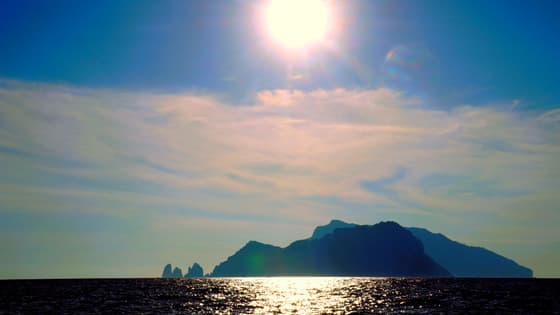
Alicudi and Filicudi—the smallest, wildest, and most remote of the seven Aeolian Islands —are like twin sisters. Different twins, distant from the other “sister islands”, yet united by both their geographic location and the beauty of their land, sparsely populated and rugged. And perhaps precisely for this reason, they are stunning. Here, it truly feels like being on other planets, ages away from the normal Earth. But above all, the ferocious tourism here won’t come, with its indiscriminate crowds looking only for selfies and food, between one tan and another. People come here to experience the islands, truly experience them (sacrifices included), and not just to have fun on the beach. The journey to reach them is not easy at all: whether you land in Palermo (Falcone & Borsellino Airport) or Catania Fontanarossa Airport, you must take the highway to the port of Milazzo (Messina), from which hydrofoils and ferries depart for these islands.
Far from everything: even from excursions
The farther away of the two islands is Alicudi, a small land of volcanic origin, although no more dangerous today, inhabited only on the southern side. Filicudi (from “Phoenicus”, dwarf palm) is located a short distance from Alicudi, much closer to the other sister islands and rich in vegetation, especially palm trees. It is also more populated. Despite the incredible beauty of these islands, they are excluded from any tourist itinerary. Even the excursions organized by tour operators! In the summertime hustle and bustle, they all jostle to secure customers to take to the Aeolian Islands, departing from Messina, Taormina, and Catania— but they won’t include these two distant islands in their travel proposals. If you want to visit Alicudi and Filicudi, you’ll have to take a regular public hydrofoil and travel to the islands on your own, carefully considering the length of your stay and the return journey.
Filicudi: the island of sunsets and shipwrecks
Arriving from Milazzo, Filicudi is the penultimate island of the Aeolian archipelago. Far away from Salina and the others, it will welcome you with the small port of Filicudi Porto, on the northeastern coast; along with the Pecorini a Mare pier (on the opposite coast), it is the only landing place, although both offer very few services and even fewer amenities.
Filicudi is famous for its patches of wild vegetation. As mentioned, beautiful dwarf palms grow here, as do broom, capers, mastic trees, and olive trees, periodically inhabited by migratory birds and large birds of prey. The inhabitants live between Filicudi Porto, Valdichiesa, Pecorini, and Pecorini a Mare. Other smaller villages are scattered across the small territory, rich in cultivated fields.
The island offers a spectacular spot for admiring sunsets. Punta Stimpagnato is the ideal place to end a day on Filicudi, perhaps with some delicious fruit to eat and a nice glass of wine for a drink, waiting for the sun to become a fiery red disc floating on the sea. Filicudi also boasts several archaeological sites, both above ground (Capo Graziano and Filobraccio) and… submerged! Four shipwrecks from the Roman and Medieval eras lie in the beautiful seabed. The island’s most famous beaches, if you want to enjoy a bit of sea, are Le Punte, Brigantini, Punta Perciato, and Porto beach.
Alicudi: the island without streets
It is the furthest island of all, Alicudi—a name derived from the Greek Ericussa or Arcussa (ivy island). From afar, it looks like a barren, ugly, giant rock, but its magic can only be seen by disembarking on the southern side, the only place where man has been able to put down roots (in the north, strong winds and storm surges make all human activity almost impossible).
Once you disembark at Alicudi Porto, you’ll find yourself facing a flight of steps and a few donkeys. Because (hold on tight…!) there are no streets, here! And therefore, no cars either. There aren’t even house numbers, and each building is identified by the number of steps separating it from the port. Where do you live? On the 20th step! Where is the B&B? On the 218th step! So be prepared to walk, climb, sweat, or to prance on the back of a donkey—until you reach your destination.
In return, you’ll experience special emotions and unique views. Capers and brooms, wildflowers and lemons bloom in Alicudi, among goats, rabbits, herons, flamingos, and birds of prey. The only inhabited center is the village of Alicudi Porto, divided into 12 “contrade”. The highest is Contrada Montagna, located almost at the top of the extinct volcano (370 meters above sea level). Alicudi’s monuments, beyond the village’s three small churches, are rock formations sculpted by natural elements. Look for names such as: Scoglio Perciato, Scoglio Palumba, Scoglio Galera. Each of these locations also hosts a wild and beautiful beach, but if you’re looking for beaches with a minimum of amenities, head instead for a swim at Porto or Bazzina.
Did you know women can fly in Alicudi?
The two “distant twins” of the Aeolian Islands live immersed in an aura of mystery that extends from the past to the present. Myths and legends have lingered on these isolated lands for centuries, yet to be supplanted by modernity. The allure of ghosts and sirens intertwines with tales of witches. Because… there are witches on Alicudi, didn’t you know?
Here they call them mahàre, meaning “magic women”. They are women who come out at night to cast healing spells or ward off evil. If the island is in trouble, the mahàre “fly” out and return with supplies and basic necessities for all the inhabitants. Associated with the mahàre are the “wind cutters”: this ancient ritual, passed down among local fishermen, is an invocation halfway between Christianity and paganism, recited by waving a knife toward the sky: this is how the sea winds and tornadoes are “cut” (stopped)!
Filicudi also has its own legends. For example, in the heart of the Bue Marino Grotto… where the moonlight meets the seawater… ghosts are said to stir. And no one believes it’s just the reflections of the seaweed moving beneath the waves, because the locals swear they’ve actually seen strange spirits there! A more amusing legend explains why the Filicudi men are so good at music and singing: it seems that in the past, some of the ugliest women in the world lived here, at the Zucco Grande area! The challenge among the local men was to make these ugly women fall in love with one of them… hence the “battle” of serenades, for centuries!
How can you not fall in love with these mysterious and distant worlds, even if it means sacrificing the nightlife on the trendiest beaches of the “other” Aeolian Islands?
