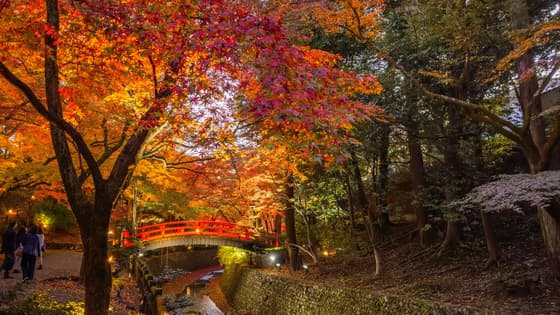
Autumn is one of the most beautiful seasons in Japan. As summer slowly fades and the air becomes cooler, the country’s mountains, parks, gardens, and temple grounds are transformed into a spectacular display of red, orange, yellow, and gold. This seasonal change, known as kōyō, is deeply appreciated in Japanese culture and attracts visitors from around the world. Among all the places famous for autumn colors, Kyoto holds a special place. With its ancient temples, traditional gardens, quiet streets, and surrounding mountains, the city provides an extraordinary setting for experiencing the beauty of autumn.
The most beautiful autumn colors in Japan
The arrival of autumn in Japan is gradual. The colors usually begin to appear in the northern and mountainous regions before moving southward. People often follow the changing leaves in much the same way that they follow the cherry blossoms in spring. Japanese weather forecasts even provide kōyō forecasts, indicating when different areas are expected to reach their peak of autumn color. The season generally begins in the mountains in October and reaches many parts of Kyoto in November, although the exact timing changes from year to year.
The Japanese maple is perhaps the most famous symbol of autumn. Its delicate leaves can turn brilliant shades of crimson, scarlet, orange, and deep burgundy. Other trees contribute their own colors to the landscape. Ginkgo trees become bright yellow, creating dramatic golden canopies, while other deciduous trees add shades of amber and brown. The combination of these colors, especially when contrasted with evergreen trees, moss-covered stones, wooden buildings, and clear blue skies, creates the distinctive visual character of a Japanese autumn.
How to get there and how to explore?
Kyoto is a very well-organized city in terms of transportation and offers a variety of options for easy travel. It does not have a dedicated airport. The closest one is Osaka Itami (ITM) but most tourist prefer to arrive at Osaka Kansai Airport (KIX). Both airports are well connected to the territory thanks to private transportation and vehicles with drivers.
The most popular means of transportation among tourists is the bus, as it allows access to many areas of the city and major attractions, such as temples and shrines. The city also has a subway network, consisting of two main lines, which quickly connects different areas of Kyoto. The subway is particularly useful for avoiding traffic and reaching some central areas. Another important means of transportation is the train.
But the best way to admire Kyoto is walking or riding a bike. Cycling is a very practical means of transportation, as Kyoto is relatively flat. Many people choose to rent a bike to explore the city more freely.
Kyoto: temples in the gold
Kyoto is particularly special because the natural beauty of the season is closely connected with the city’s history and architecture. Once the imperial capital of Japan, Kyoto is home to thousands of temples, shrines, gardens, and traditional neighborhoods. In autumn, these historic places become surrounded by vibrant foliage, producing scenes that seem almost timeless.
One of the most famous places to experience autumn in Kyoto is Kiyomizu-dera, a Buddhist temple located on the eastern side of the city. The temple’s large wooden stage offers impressive views across Kyoto, and in autumn the surrounding hills are covered with colorful trees. During the evening, the monks artificially light the autumn leaves against the darkness, creating an atmosphere that is completely different from the daytime landscape. The combination of traditional architecture and illuminated maple trees makes Kiyomizu-dera one of Kyoto’s most memorable autumn destinations.
Another spectacular location is Tōfuku-ji, a Zen temple particularly famous for its maple trees. The view from the temple’s Tsūtenkyō Bridge is often filled with waves of red, orange, and yellow foliage. In the peak season, many people visit specifically to see this landscape. Although the temple can become crowded, the beauty of the scene explains its popularity. Standing above a valley of maple trees, surrounded by historic wooden structures, gives visitors a remarkable sense of being immersed in the season.
Arashiyama, on the western edge of Kyoto, is another essential destination in autumn. Famous for its bamboo grove, mountains, river, and temples, Arashiyama becomes especially picturesque when the surrounding hills change color. The area around the Katsura River provides beautiful views of autumn foliage reflected in the water. From certain viewpoints, the colorful mountains form a dramatic background to traditional bridges and temples. A walk through Arashiyama in the cool autumn air can feel peaceful and almost dreamlike, particularly early in the morning.
The Philosopher’s Path
The Philosopher’s Path is another wonderful place to appreciate Kyoto’s autumn atmosphere. This pleasant walking route follows a canal between Ginkaku-ji and the southern Higashiyama area. Although it is perhaps more famous for cherry blossoms in spring, autumn brings a different kind of beauty. Trees along the canal develop warm autumn colors, while fallen leaves cover parts of the path. The surrounding neighborhood contains small cafés, shops, temples, and gardens, making the walk as much about discovering Kyoto’s everyday atmosphere as it is about seeing famous sights.
Autumn in Kyoto: not only a visual experience
For a quieter experience, visitors can explore Kyoto’s many traditional gardens. Places such as Eikandō and Nanzen-ji are renowned for their autumn scenery. Eikandō, in particular, has long been associated with beautiful autumn leaves. Its gardens contain ponds, bridges, stone pathways, and maple trees, allowing visitors to experience the season from many different perspectives. The reflection of red and orange leaves on the surface of a calm pond can be just as striking as the trees themselves.
Autumn in Kyoto is not only a visual experience. It also engages the other senses. The temperature becomes pleasantly cool, and the smell of fallen leaves mixes with the scents of traditional Japanese food. Sometimes the most beautiful autumn scene is not the one found on a postcard but a small tree glowing red beside an old wooden house or a quiet temple garden covered with fallen leaves. The colors may last only a few weeks, but the impressions they create can remain for a lifetime. In the quiet glow of a red maple, the reflection of golden leaves on a pond, or the sound of footsteps through a carpet of autumn foliage, Kyoto reveals one of Japan’s most beautiful lessons: sometimes the fleeting nature of beauty is precisely what makes it so meaningful.