
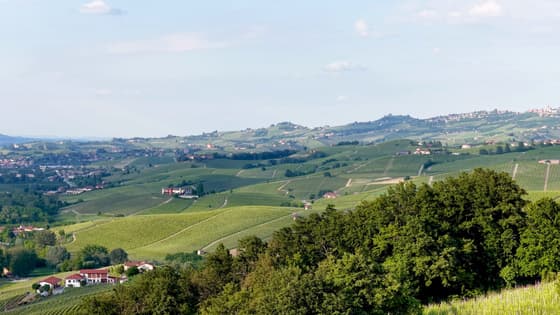
In the heart of the Langhe Hills (in the district of Cuneo), in the deepest, most ancient part of Piedmont, lies a village of only 700 inhabitants. Yet, its name is known worldwide, synonymous with quality and excellence. We are talking about Barolo, the small town that gave its name to one of Italy’s most significant wine-producing regions. Have you ever wondered what it would be like to spend a holiday here? Actually, Barolo is perhaps too small to be considered a “tourist destination” in the conventional sense, but it serves as an ideal base for exploring the flavors and natural beauty of the Piedmontese Langhe. Reaching the village is easy, thanks to convenient motorways connecting it to three major airports: Turin Caselle (the closest, just an hour away), Genoa Airport, and Milan Malpensa (two-hour drive). Everything else is… good wine!
The history of Barolo village
Originally a small settlement of Celtic-Ligurian origin, the village grew during the Lombard era. By the Middle Ages, it had become a key landmark in the Langhe, serving as a highly coveted fiefdom for many of the region’s wealthy families. It first became part of the County of Alba, later evolving into a marquisate under the rule of the Falletti family—a dynasty that would remain in control of the town until the Unification of Italy.
The history of the Barolo wine
It is thanks to the Falletti family that the world can enjoy a fine glass of Barolo wine, today. In the 1830s and 1840s, the family’s cellars were already attracting connoisseurs, drawn by their unique approach to processing Nebbiolo grapes—a variety characteristic of this part of Piedmont. A manual written in 1835 by Paolo Francesco Staglieno, titled “Instructions on the Best Method for Making and Preserving Wines in Piedmont”, brought to light the quality of this new wine produced through a slower-than-usual process that resulted in a uniquely rich flavor.
The success of the “wine from the cellars of Barolo” was so great that demand grew year after year. In 1841, even Count Cavour purchased a barrel! The promotion of this wine was driven by the personal enthusiasm of the marchioness Lady Julia Colbert Falletti di Barolo; today, the production of this wine has become the crown jewel of the local economy across a group of municipalities—not only Barolo, but also Castiglione Falletto, Serralunga d’Alba, and parts of the territories of La Morra, Monforte d’Alba, Roddi, Verduno, Cherasco, Diano d’Alba, Novello, and Grinzane Cavour.
Your itinerary starting from Barolo
Make Barolo your base, taking advantage of the tranquility of this small village. From here, you can set out to explore a vibrant region that—especially in autumn—is packed with events!
The heart of the village of Barolo is undoubtedly its namesake castle. Dating back to the 10th century, it now features a classic 19th-century appearance, though it still retains some older decorative elements. Inside, you will find the Ethnographic and Oenological Museum and the Regional Barolo Wine Cellar. You can visit rooms such as the Hall of Coats of Arms (Stanza degli Stemmi), the Marchioness’ Chamber (Stanza della Marchesa), and the library—where the writer and patriot Silvio Pellico once stayed. Also worth a visit is Barolo’s main church, San Donato (15th century).
Surrounding Barolo lies the Langhe Hills, just waiting to be explored! With its wineries, green fields, and small villages steeped in a regal history, this area is a collection of unique treasures. For instance, visit the village of La Morra, famous for its panoramic viewpoint and its distinctive red-brick churches. Other highlights include Monforte d’Alba, with its steep, winding streets and historic center, and Neive, which is recognized as one of the most beautiful villages in Italy. History enthusiasts should not miss the majestic and captivating Castle of Grinzane Cavour, linked to the statesman Camillo Benso di Cavour.
Of course, the Langhe is the perfect place to savor Piedmontese specialties that go well beyond the region’s classic wines—think tajarin pasta, beef tartare, hazelnuts, and various cheeses—all enjoyed amidst the authentic scents of the natural landscape. From the Langhe and Barolo, you can also easily and quickly reach the cities of Alba and Turin.
Why visit Alba?
Alba is the “capital” of the Langhe. It is known in Italy and throughout the world primarily for its food and wine products, its hilly landscapes, and its long history. With a population of approximately 30,000, the city is one of the most significant locations in Piedmont. A visit—ideally with Barolo as your base—is a must.
Alba’s historic quarter preserves numerous traces of the past. As you stroll through its streets, you can admire historic buildings, medieval towers, churches, and distinctive squares. Among the most noteworthy monuments are the Cathedral of San Lorenzo, dedicated to the city’s patron saint, and the Church of San Domenico. The towers—some of which can still be seen in the historic center—serve as a reminder of the importance Alba held during the Middle Ages.
Another of Alba’s “monuments” is its food-and-wine tradition! Every autumn, the renowned white truffle takes center stage at the International Alba White Truffle Fair, an event that draws visitors and enthusiasts from many countries. The city is also home to Ferrero, one of the world’s best-known confectionery companies. In 2014, the Langhe region was designated a UNESCO World Heritage Site.
A day in Turin
Turin is an ideal destination for any occasion; you might fall in love with it over the course of a week, a weekend, or even just a single day. Many of the city’s main attractions are located in the historic core and are easily accessible on foot—after a comfortable private vehicle with a driver has brought you there from Barolo.
The city’s iconic landmark is the Mole Antonelliana dome, which houses the National Museum of Cinema. It is well worth visiting the museum and, if possible, taking the panoramic elevator up to the terrace, which offers a splendid view of Turin and the Alps. Another unmissable stop is the Egyptian Museum, one of the most important in the world dedicated to the civilization of ancient Egypt.
To learn about the history of the House of Savoy, take a stroll through Castello square and visit the Royal Museums, which include the Royal Palace, the Sabauda Gallery, the Royal Armory, and the Royal Gardens. From there, you can continue toward San Carlo square, considered one of the most elegant landmarks in the city. Turin also offers pleasant green spaces: Parco del Valentino, located along the Po River, is perfect for a walk, a bike ride, or a relaxing break. If you have the time, you can also visit the Basilica of Superga and the Royal Palace Venaria, both located just outside the city.
Finally, you cannot leave Turin without sampling some local specialties: bicerin, agnolotti, gianduiotti, and chocolate. In the evening, you might enjoy a stroll through the Quadrilatero Romano quarter or the San Salvario district, both of which are packed with bars and restaurants.
