
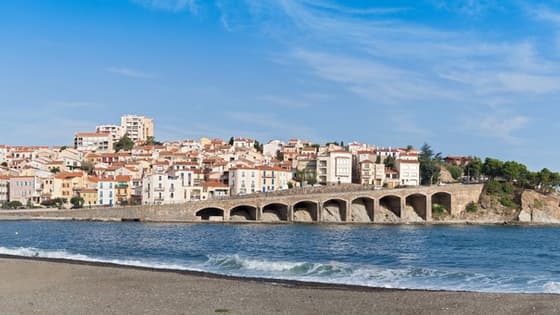
Cerbère beach divides France from Spain. Or perhaps it unites them? We know for sure that the famous mythological dog guarding the Greek Hell (Cerberus) has nothing to do with the name of this place… which rather derives from ancient French terms meaning “rocks”… and we also know that a vacation here is worth the trip. Cerbère is a small town of 2,000 inhabitants, but the coast that takes its name is a long stretch of wonders waiting to be discovered: Perpignan, Girona, Lloret de Mar… names that mass tourism knows and frequents. Names of places you can rediscover with new eyes by basing yourself in Cerbère.
Relax and swim in Cerbère/Cervera
Like all border towns, this one also has two names: Cerbère in French and Cervera (Cervera de la Marenda) in Spanish. And beneath these two names lies a unique, simple beauty. A perfect solution for those who want to travel along the splendid Iberian coast, famous for its VIP tourism, without spending too much and without sharing spaces and events with snobbish tourists!
An independent municipality only since 1889, Cerbère was already well-known in ancient Roman times. Today, it is a small fishing village that is increasingly focusing on seaside tourism, thanks in part to its many beaches, some intimate and romantic, others livelier. For swimming in Cerbère, many choose the beaches near the town, such as Plage Cerbère, El Saurel, and El Canu. If you’re looking for something a little more unique, head north, between Cape Canadell and Cape Peyrefite, and you’ll find the coves of Terrimbo and Peyrefite. To the south, across the border with Spain, the ideal beach might be Portbou.
In order to relax, simply stroll through the center of Cerbère and enjoy the local recipes, a harmonious blend of elegant French and spicy Spanish cuisine. The heart of the town is the Place de la République, where the simple life of the locals takes place. A fascinating monument is the Cap Cerbère Lighthouse, located outside the city, on the promontory marking the border between France and Spain. If you relax by the sea, don’t miss the opportunity to go diving: the Cerbère seabed was France’s first protected marine reserve!
Your starting point: where to head from Cerbère?
Cerbère is a great starting point. Excellent as a relaxing base for the beach, if you have a private vehicle or a transfer with a dedicated driver, you can set off from here to discover wonderful and luxurious locations. But there’s no need for a five-star hotel when you can get to and from Cerbère so easily.
Equidistant (about an hour’s drive) north and south of the city center, respectively, the cities of Perpignan in France and Girona in Spain will satisfy your desire to discover cultural hotspots and summer events. Girona also serves Cerbère with its own international airport Costa Brava (GRO) (the other airport serving the town is Barcelona – BCN), making it very well connected. Famous for its history, architecture, and medieval charm, Girona offers monuments such as the Cathedral of Santa Maria, featuring one of the largest Gothic naves in the world, the colorful houses overlooking the Onyar riverfront, museums, quiet squares. There are of course numerous restaurants where you can enjoy Catalan cuisine. Lloret de Mar is another Spanish destination worth a visit from Cerbère for its historical and natural beauty.
Perpignan has a very medieval historic core characterized by important monuments such as the Palace of the Kings of Majorca, the Castellett, and the Cathedral of St. John the Baptist. There is no shortage of colorful markets that create a welcoming atmosphere, with numerous cultural and artistic events taking place in the streets.
Slightly further destinations
Going just a little further, about a two-hour drive away, you can take day trips to the French city of Narbonne or, in Spain, to Barcelona.
Narbonne is a historic city and an ancient center of the Roman Empire due to its location on the Via Domitia and its ancient commercial port. Today, visitors can admire the Cathedral of Saints Just and Saint-Pastore, the charming old town, and the covered market Les Halles, highly prized for its local produce. Narbonne also offers fascinating natural landscapes, including coastal lagoons and nearby Mediterranean beaches. The city combines history, culture, and gastronomy through specialties such as oysters, regional wines, and traditional Occitan dishes.
Barcelona needs no introduction! With a rich history, vibrant culture, and a world-class architectural paradise, it is famous for the enormous Sagrada Família church (recently inaugurated by Pope Leo 14), an extraordinary basilica designed by architect Antoni Gaudí, known for its original forms and artistic details. In the same style, the Gothic Quarter and Park Güell are rich in extraordinary shapes and colors. It goes without saying that the city is also known for its long beach.
Nature near Cerbère
About a two-hour drive from Cerbère, you can spend an interesting day at the Catalan Pyrenees Regional Park , an important natural area located in the Pyrenees mountain range, on the border between France and Spain.
This protected area was created with the aim of conserving natural environments, protecting biodiversity, and promoting the traditions of the local communities living in the mountain valleys. The Pyrenees are ancient and spectacular mountains, characterized by highly diverse landscapes: high rocky peaks, forests, alpine lakes, meadows, and deep valleys. Numerous animal and plant species live within the park. Among the most representative animals are the brown bear, the Pyrenean chamois, the golden eagle, and numerous birds of prey. The forests are home to trees such as beech, fir, and pine, while the higher areas are home to plants adapted to the harsh mountain climate. Protecting these ecosystems is essential to maintaining the natural balance and combating biodiversity loss. The park offers many activities for nature-loving visitors. There are numerous hiking trails, trekking routes, wildlife observation itineraries, and locations suitable for landscape photography. In winter, some areas also allow snow activities, such as skiing and snowshoeing.
In addition to its environmental heritage, the park also preserves an important cultural heritage. In the mountain villages, you can discover ancient traditions, local festivals, crafts, and typical products linked to pastoral life. Mountain farming and agriculture have played a fundamental role in the history of the Pyrenean people. The Pyrenees Regional Park is a place where nature, culture, and sustainable tourism coexist. Its protection allows future generations to experience and appreciate one of Europe’s most fascinating mountain environments.
