
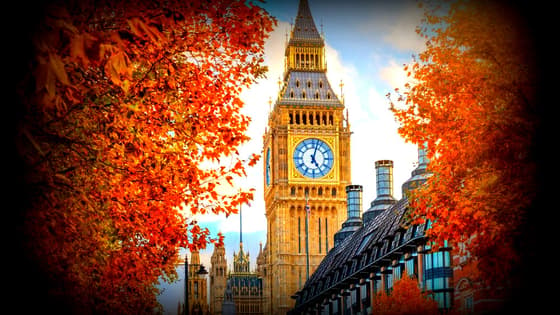
The usual weekend in London? Perhaps autumn calls for something different! While London is always a great choice, a less hectic and less sunny season is the perfect time to discover the British capital’s quirkier, more entertaining, and—in a word—”crazy” side. That’s the nature of London: elegant, regal, and beautiful, sure … but also unconventional and original when the mood strikes. You can freely choose which of the many international airports to fly into (Heathrow, Gatwick, and Luton are the busiest of the city’s six hubs), knowing that a chauffeur-driven car will be waiting to whisk you away on a tour of the city’s most unexpected routes. It promises to be a unique experience!
London Street Art
To ease yourself in without too much of a “shock”, start with a classic itinerary of London’s oddities: the East End. This is London’s rule-breaking, most vibrant, and original district—though it never goes too far over the top. People flock to the East End to admire stunning murals (including works by Banksy), ethnic restaurants, flower markets teeming with street performers, and fairs showcasing quirky handicrafts.
From there, you can head to Brixton, where African culture dominates the scene with its vibrant colors, distinctive music, and unique flavors. Finally, do not miss the street art in Little Venice, a quiet area just outside the city center where a network of canals branching off the Thames evokes—as the name suggests— the Italian city of Venice.
The “Epidemic Tour”
If you aren’t easily spooked, venture out on some of the British capital’s more macabre tours. London and mystery always go hand in hand, just as London does with ghosts or terror. The fog and the climate foster specific atmospheres and itineraries. One of such routes is the “epidemic tour”—though it actually focuses on just one tragedy: the Great Plague of London.
Breaking out in 1665, the plague decimated the city’s population—cutting it nearly in half—at a time when London was already one of the world’s major metropolises. It was a tragedy never forgotten; indeed, many monuments bear plaques commemorating it.
The epidemic tour takes you from the parish of St Giles-in-the-Fields (which, during the plague, was a village outside the city walls and the site where the first cases were identified) to Pudding Lane, where the most devastating fire in London’s history broke out—putting an end to the contagion. Along the way, you will see sites such as Charterhouse (home to mass graves), the Aldgate Water Pump, Seething Lane, and the “Golden Boy” at Pye Corner, where the final case was diagnosed.
On the trail of the killer…
Still hungry for thrills? Then try the “Murder Mile Tour”. Along this route, which cuts through the Soho district, you will hear the stories of twelve killers—including notorious figures such as Dennis Nilsen, the Blackout Ripper, the Lonely Hearts Killer, and Jack the Ripper—covering fifteen crime scenes and around fifty victims.
The terror lies not only in the gruesome details of the crimes but also in the fact that many of them remain unsolved. And you will feel the killers breathing down your neck, as if they might suddenly spring out from any corner. It is a thrilling experience that will nonetheless lead you to discover one of London’s most distinctive neighbourhoods.
Did you know there is a “restroom tour” as well?
If fear has completely taken hold of you—causing, shall we say, physical reactions—you might find yourself frantically looking for a toilet! Well, there is actually a tour dedicated to this very subject. It’s no joke; London hosts public restroom discovery tours (the Loo Tour)! It’s not just about discovering that some public restroom facilities are historic and treated as genuine cultural landmarks; each stop is also linked to stories, tales, and intrigues that unfolded in the shadows of these very water closets!
Believe it or not, the tour even incorporates elements of history, politics, philosophy, criminology, and art! Since the route includes stops for a drink at historic, prestigious pubs, visiting the public restrooms might actually prove… very useful!
Let’s relax with some gin!
Before slowly returning to the routine of a classic sightseeing trip, unwind with a tasting of the British capital’s finest gins. You can do this comfortably via another weird tour that takes you to discover both old and new distilleries.
Gin has a long history tied to the city and has become a key part of London culture over the centuries. The tour includes visits to specialized venues where you can learn about the various stages of gin production. Guides explain how ingredients are selected, how botanicals are used to create unique flavor profiles, and the techniques involved in distillation. A highlight of the experience is the tasting session, where you can sample different types of gin and compare their aromas and flavors. The tour also offers a chance to explore London’s distinctive neighbourhoods and learn fascinating facts about the history of gin—from its widespread popularity in the 18th century to the modern-day resurgence of craft distilleries.
Joining a gin tour means combining culture, history, and gastronomy into a single experience. It is an ideal activity for anyone wishing to see London from a different perspective, spend a few hours socializing, sample local products, and discover new flavor combinations.
So much more to discover
Weird tours are springing up in London all the time. Lately, there seems to be a contest to create increasingly wild itineraries designed to amaze visitors in ever-new ways. Beyond the ones we’ve described, you could try a kayak tour ( www.londonkayakcompany.com/kayak-bus.html ), an afternoon tea on the bus tour ( www.b-bakery.com/london/bus-tours/afternoon-tea-bus-london ), or tours focused on cheese, drag queens, famous filming locations, and more.
And London is anything but a boring city! So why does it constantly strive to push the boundaries?
Because it loves to reveal a new face. Alongside famous landmarks like Big Ben and Buckingham Palace, hidden corners, colorful markets, and vibrant neighborhoods play a major role in its cultural heritage. Its charm stems largely from contrasts: modern skyscrapers rise up next to historic buildings, while in the city’s peaceful parks, the urban bustle feels worlds away. London surprises visitors with people from every corner of the globe, stories told in a multitude of languages, and lives that intertwine at every turn. Despite the cliché of grey skies and perpetual rain—which are part of its character—London is never the same: it is constantly changing, and for that very reason, it manages to amaze every time.
