
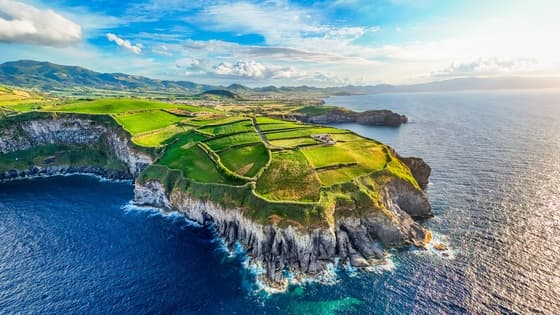
Take advantage of spring to discover Portugal. But not so much the continental part, that is the nation nestled at the tip of the Iberian Peninsula, overlooking the Atlantic, but rather the “flashes” of Portugal scattered across the ocean. This country includes two archipelagos, both European despite being located in the middle of the Atlantic. And while the Azores are already quite famous from a tourist perspective, the islands commonly known as “Madeira” are not so “trendy” yet. Though actually composed of several distinct entities, Madeira island is the most important.
Azores, the blue islands of birds of prey
The Azores archipelago—which owes its name to the azure color of the islands when seen from afar—is located almost 2,000 km off the coast of Portugal, in the heart of the Atlantic Ocean. According to some versions, the name could also derive from the açòr (goshawk), a species of bird of prey that was widespread at the time of the islands’ discovery.
Today, the Azores are a tourist paradise, but for centuries, starting in the 15th century, they were an important landing point for travelers heading to the new American colonies. Both the Spanish and the English ships stopped here to refuel and rest before the final and most dangerous stretch of the crossing to North or South America. Today, the recommended way to reach the islands is by airplane (unless you want to see them on a cruise ship!), landing at the archipelago’s most important airports: Ponta Delgada Airport (PDL) and Horta Airport (HOR).
A nice itinerary at the Azores
The Azores are a total of nine islands, divided into three “areas” of three: the Eastern Islands (São Miguel, Santa Maria, and the Formigas Islets), the Central Islands (Terceira, Graciosa, São Jorge, Pico, Faial), and the Western Islands (Flores and Corvo). Visiting them all certainly requires time and money, so we recommend some ideal itineraries to admire the most fascinating natural and architectural beauties.
One island definitely worth seeing is São Miguel. It is the largest of the archipelago and is home to the city of Ponta Delgada with its infrastructure, monuments, and tourist places. In addition to its typically colonial architecture, created by mixing white stone and black lava rock, the city is home to historic monuments such as Fort San Blas and modern ones such as the Portas da Cidade. A natural wonder on the island is the Lagoa das Sete Cidades, a freshwater lake located within the caldera of an ancient extinct volcano. Its distinctive feature is its dual color, making the lake appear to be divided into two smaller bodies of water. Another must-see is Ferraria, famous for its lighthouse and hot springs. If you look out from the Pico Vermelho trail, with its characteristic windmill, you’ll admire the coast and the famous elephant-shaped rock.
Pico is another island worth visiting during a vacation in the Azores. Portugal’s highest mountain, Mount Pico (2,351 meters above sea level), rises here and can be admired in all its splendor from the trails of the Criação Velha nature reserve.
Those seeking a sun-drenched vacation should choose the island of Faial, famous for its beaches like Dos Capelinhos with its natural pools, the lively Porto Pim, or the romantic Praia Almoxarife. Wild adventures are best experienced on the two westernmost islands, such as Corvo, where you can admire the world from the top of Caldeirão, a volcanic cone now overgrown with greenery and home to a small mountain lake at its center; or by chasing waterfalls and gorges on the verdant and exotic island of Flores.
Madeira and its sisters
Madeira is a smaller archipelago, located much further south than the Azores, almost bordering the Canary Islands and Africa. It consists of two large islands, Madeira and Porto Santo, and other small, uninhabited islands called Las Desertas and Las Salvagens. The islands can be reached by plane, landing at Madeira Funchal Airport (FNC).
The ideal itinerary for this second archipelago will certainly focus on the two inhabited islands.
Madeira is known as the “island of springtime”, not only for its consistently high temperatures above 20 degrees (68 degrees Fahrenheit) but also for the stunning variety of flowers and plants that adorn it. The capital, Funchal, offers ancient architecture (the cathedral, the São Tiago Fort) and natural beauty, such as the botanical garden. Sports enthusiasts won’t miss a visit to the CR7 Museum, dedicated to the famous fellow citizen and footballer Cristiano Ronaldo. Treat yourself to a hike along the paths that run alongside the waterways (levadas) of the island and get to the cliffs of Cabo Girão, which offer breathtaking views from its 580-meter height. If you wonder what it’s like to live inside a volcano, stop in the village of Curral das Freiras, located at the bottom of an ancient extinct crater!
Porto Santo is also famous for its high cliffs overlooking rocky beaches. Rocks are the island’s main monuments, including geological formations such as Pico Ana Ferreira (where an ancient volcano “froze” its lava in time in the shape of “organ pipes”) or Fonte de Areira (the bed of an ancient fossil sea that still displays its petrified corals). The most famous town is Vila Baleira, where you will admire whales and dolphins often passing by, off its beaches. Booking a boat trip from here is, in fact, a must for the nascent tourism industry!
