
England has a rich history dating back thousands of years and has been at the center of key events. We all know it as a nation, a fundamental part of the United Kingdom, rich in culture and modernity but never renouncing the elegance of a thousand-year-old royal history. London, Manchester, Liverpool… these are cities we’ve all heard of at least once in our lives, and many have visited them often. The English landscape is very diverse: you can find large modern cities, green countryside, hills, spectacular coastlines, and numerous natural parks. The climate is generally temperate, with mild summers and cold winters, although rain is frequent throughout the year. Home of Shakespeare, the Beatles, Lady Diana, and fish and chips… when you say England, you think of everything except beaches and the sea. But …
The English coasts and seaside holidays
But …is it true that the English sea is always cold? Are there any beaches suitable for surfing in England? Seaside holidays are an attractive option for those who want to discover a different side of this country. For once, dare to leave the castles and museums behind and treat yourself to a seaside holiday on these coasts. Will you go for a swim?
England’s beaches overlook both the North Sea and the Atlantic Ocean and attract millions of visitors every year. Among the most popular destinations are Brighton, Bournemouth, Cornwall. During the summer, many tourists enjoy activities such as swimming, surfing, sailing, kayaking, and coastal walks, surrounded by breathtaking views, bays, sea stacks, and nature trails. Furthermore, numerous fishing villages offer the opportunity to savor local specialties based on fresh fish and seafood.
The English climate is variable, and sea temperatures are generally lower than those of the Mediterranean. However, on sunny days, the beaches fill up with visitors who take advantage of the good weather to relax and enjoy the outdoors. Beach holidays in England offer a unique experience, combining sea, nature, culture, and local traditions. And it can always surprise… perhaps with a light drizzle catching you just as you emerge from the water, or with a beautiful sun warming your tan while a cool breeze makes you shiver!
How to get to England’s beaches?
Scattered along the entire perimeter of the English coast, the beaches are located in different locations. However, thanks to the highly efficient local transport system, especially fast trains, buses, and private transfers (including chauffeur-driven ones), reaching a beach even two or three hours’ drive from any airport is not a problem. Keep Manchester, Leeds, and London airports in mind when planning your English beach trips. Here’s a detailed breakdown of where and how to get there.
Western beaches
If we first consider the northwestern portion of England, just above Wales, Manchester Airport (MAN) will naturally be your point of reference, especially if you want to combine sports and swimming and visit the beaches of the Lake District. This spectacular national park, encompassing both mountain peaks with the most beautiful lakes and coastlines, ends at the sea with vast, sandy river mouths. Beaches such as Haverigg, Ulverston, and Grange-over-Sands have a wild, untamed aspect that will delight adventure lovers. Be careful when swimming here; lifeguards aren’t always on duty, and the sea tides are dangerous.
By landing at Exeter regional airport, you can quickly reach the beaches of Bude and Falmouth. We are still on the west coast, but below Wales. Bude, in Cornwall, boasts sandy beaches complemented by large green meadows. And while the village exudes an old-world charm with stone houses and thatched or slate roofs, just a few meters from the beach you can see the gigantic cables carrying optic fiber and electricity from Europe to America!
Falmouth, in southern Cornwall, is a well-organized seaside town offering one of Europe’s most beautiful natural bays as well as numerous cultural services and events: in addition to the beaches, its historic center, museums, castles guarantee plenty of activities beyond the sea.
Remember, Cornwall is England’s surfing paradise!
The beaches of the south
Southern England is home to the most popular and touristy beaches in the country. It goes without saying that Bournemouth will be the main destination. Nearly 200,000 inhabitants, endless miles of golden sand interspersed with wooden piers where events are held in the summer. This location enjoys one of the best climates for swimming in England, and its many amenities ensure that tourists will never get bored.
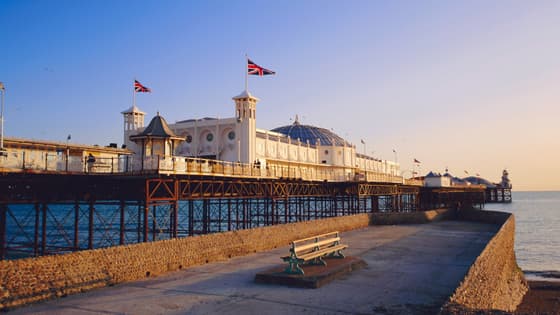
A thousand-year-old city (founded in the 11th century) and a seaside resort since 1787 (when the English royals built the first private hotels for their holidays!), Brighton is also famous throughout Europe as a popular student center. Numerous schools offer English courses to foreigners, and its “red” beaches have been frequented and loved by young people from around the world.
To reach Bournemouth and Brighton, the nearest airport is London Heathrow (LHR), which is less than two hours’ drive from the coast.
Gorleston-on-Sea
Also London, but in this case the smaller Stansted (STN) airport, will be the arrival point for those who want to spend a few days on a quiet and romantic beach located on the east coast of England. Gorleston-on-Sea is an ancient town that still boasts stone buildings in its historic core, with castles and Gothic churches. The beach is vast, full of amenities, and bordered by beautiful gardens that embellish the seafront. Shops, restaurants, and yacht clubs guarantee a holiday with all the right services for those who want to enjoy sea without sacrifices. Sunrises in Gorleston are an unmissable photo opportunity!
Beaches and castles of the North
The beaches of northeast England can be reached with direct transfers from Manchester and Leeds (LBA) airports, although the former is further away (about 3 hours). The two most famous and ideal holiday destinations are Scarborough and Bamburgh.
Scarborough embraces a perfect bay, as circular as a crater, caressed by large waves that smooth the golden sand. It has a long history dating back to the Middle Ages, when it was famous throughout England for its large market (that very “Scarborough Fair” of the Simon & Garfunkel song!). Today, it’s one of the most beautiful seaside destinations due to its climate, tourist services, and the view.
Bamburgh, with its castle overlooking the sand (which strongly resembles, in shape and size, the French abbey of Mont-Saint-Michel), is a sight to behold and experience. Imposing and beautiful, the castle can be seen from every side of the beach, and when the tides change, it reflects on the wet sand, creating special effects. People come here to bathe in perfect serenity, unhurried and with no pretensions other than to… dream and relax!
