
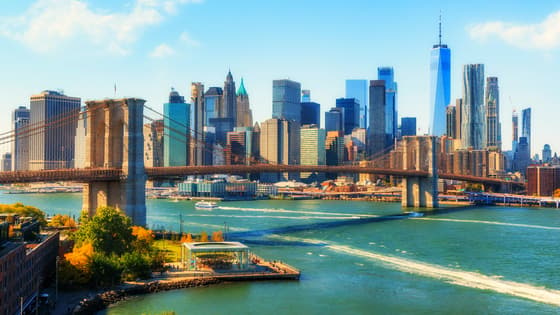
There is no more magical time in the world than autumn in New York City. You can see it even from the plane, before landing at the legendary JFK Airport – it’s the colors that make all the difference. Autumn (or Fall) in New York is as warm as a lit fireplace, a basket full of apples, or a plaid scarf. It’s a season best experienced from the ground, ideally on foot, as “strolling around” is the perfect way to savor the city’s gentle charm. That said, when traveling from the airport to your hotel … before getting around the city … a chauffeured transfer can be incredibly convenient, especially if you’re caught in a sudden downpour or need to adjust your plans on the fly. The most pedestrian-friendly part of New York is the great island of Manhattan, a mosaic of affluent neighborhoods and working-class districts. But it’s certainly not the only place worth exploring on foot!
A stroll among the trees in the city’s heart
Everyone knows that, tucked away within New York’s concrete core, lies a forest. Central Park, located in the northern part of Manhattan, is no ordinary park; it is a true natural reserve, preserved in its original state even as the metropolis grew up all around it. Today – especially in autumn – it offers the most beautiful walking route in the city. And if you can’t cover the whole thing, don’t worry: you can always follow the “Loop Route”!
The full circuit spans approximately 9.8 kilometers, taking you through some of the park’s most stunning and iconic areas. As you walk, you will encounter landmarks such as the Jacqueline Kennedy Onassis Reservoir … a large artificial basin encircled by a scenic path … Belvedere Castle, which offers a stunning view of the sur-rounding greenery, and the picturesque Bow Bridge, one of the most photographed bridges in New York. Along the way, you can also admire expansive lawns, shaded trails, statues, fountains, and romantic vistas. The landscape shifts with the seasons: in spring, the trees bloom; in summer, the park provides a refuge from the heat; in autumn, it takes on golden and reddish hues; and in winter, it assumes a tranquil, evocati-ve atmosphere.
The “Loop” is perfect both for those who enjoy walking and physical activity and for those who simply wish to spend a day in the open air. Traversing it offers a different side of New York – one defined by tranquility, nature, and beauty – all while keeping the city’s skyscrapers, which surround the park, in view. It is an unmissable experience.
A stroll across the Brooklyn Bridge
The Brooklyn Bridge is a work of art, the product of years of labor (and even the loss of human lives) from the start of its construction in 1869 until its inauguration in 1883. It has stood the test of time, soaring above the waters of the river with its brick structure and defining steel cables. It features six lanes, the two central ones reserved for pedestrians and cyclists. You can cross the bridge on foot, from Brooklyn to Manhattan or vice versa, for a truly unique experience. Imagine moving slowly, one step at a time, with towering steel cables and massive brick arches rising high above you. Meanwhile, beneath your feet, ferries and large commercial ships pass by, while skyscrapers frame the scene both ahead and behind. Walking across a monument of this scale … especially in autumn … means battling the icy winds that blow along the coast; but it is absolutely worth the effort.
Where do the wealthy live?
Manhattan is truly the beating heart of New York. Everywhere you look, you will find skyscrapers, parks, museums, shops, and incredibly elegant buildings where the country’s wealthiest people live and work. Visiting the “upper” part of Manhattan means immersing yourself in the unique, golden atmosphere of the city that never sleeps.
One of the first stops is Times Square, famous for its massive illuminated screens, advertising signs, and throngs of tourists. Not far away lies Broadway, where you can enjoy spectacular musicals and theatrical performances. Surrounding the aforementioned Central Park, you can admire historic hotels, luxury apartments, and austere churches—and, of course, ascend skyscrapers such as the Empire State Building. The “wealthy” district is also home to numerous museums: the Metropolitan Museum of Art – one of the most significant museums in the world – and the Museum of Modern Art (MoMA) are among the most beloved and known. The historic Fifth Avenue, renowned for its elegant shops, is also well worth a visit.
Finally, a trip to Wall Street is a must, as is a visit to the 9/11 Memorial – the grand, illuminated fountain that now stands where the Twin Towers once rose before being destroyed in the attacks of September 11th, 2001. It serves as a poignant touch of melancholy at the center of the grand, golden heart of the city’s most exclusive neighborhood.
From Greenwich to Little Italy via SoHo
One of the most colorful corners of Manhattan is the bohemian neighborhood of SoHo (a nod to its namesake in London). While it feels distinct from the Manhattan of the wealthy, it is not far removed; here, it is the artists and restaurateurs who set the tone.
This walking route, which takes just 30 minutes, leads you through the neighborhood, starting in Greenwich Village. You shall pass by the arch in Washington Square Park, admire the shops and art studios along Bleecker Street, and the area’s picturesque narrow streets. From there, you will head into New York’s Chinatown … famous for the shops on Canal and Mott Streets, the market stalls in Columbus Park, the Mahjong-themed murals, and the Museum of Chinese in America … before arriving in Little Italy.
This historic Italian immigrant enclave welcomes you with unique colors and flavors. You will find traditional pastry shops along Mulberry Street, red-brick buildings typical of early 20th-century working-class housing, festive decorations for the patron saint’s feast (St Gennaro!), and murals that recount the stories of the immigrants who lived here. It is also well worth visiting the nearby Old St. Patrick’s Cathedral, a stunning Neo-Gothic church originally built for the Irish, who used to be historical “rivals” of New York’s Italian community.
A stroll around Roosevelt Island
Leaving the island of Manhattan behind, head toward Queens. Along the way, you will encounter a smaller island: Roosevelt Island – one of the most charming and tranquil spots in New York City. Far removed from the city’s chaos and traffic, it offers spectacular views of the Manhattan skyline (best enjoyed from the lookout point near the United Nations Headquarters), romantic walking paths, and pockets rich in history.
One of the most evocative ways to reach the island is via the Roosevelt Island Tramway, an aerial cable car that departs from Second Avenue in Manhattan. The journey lasts only a few minutes, but it offers a truly unforgettable perspective. Once you arrive, enter Four Freedoms Park, an elegant garden dedicated to President Roosevelt. Also not to be missed is Lighthouse Park, at the northern end of the island, which is dominated by a beautiful, historic lighthouse (1872).
Amidst the various scenic views, Roosevelt Island offers some interesting examples of “architectural archaeology” from the colonial era, such as the “Smallpox Hospital” – also known as the Renwick Ruin – which are the remains of a hospital for smallpox patients built in 1856. Other sites worth visiting include Blackwell House, one of the oldest surviving colonial-era homes in New York, built in 1796, and the Octagon, a tower that was once part of a former psychiatric institution.
