
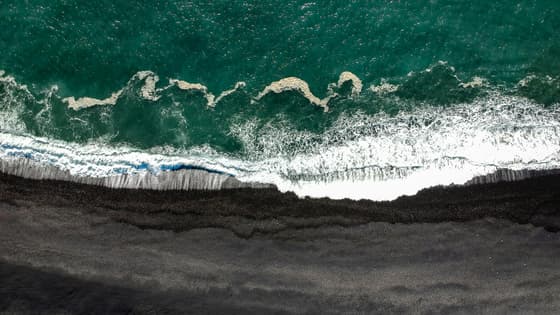
Do you want to be truly original? Treat yourself to a beach holiday… in Iceland! The island of ice and volcanoes is almost never considered a beach destination because people come here in search of adventure, extreme hiking, and Viking legends. Yet Icelanders also enjoy the sea, and their beaches are truly captivating. Get to know a few up close and try some of them, even braving the North Sea temperature, which is anything but warm in summer! So, where are the most interesting beaches in Iceland?
Great distances: choose your ideal beach
Not all Iceland’s beaches are good for swimming. Or rather, not all are suitable for the classic “beach trip,” because some are dangerous, others rocky, and others too isolated. Our advice is to carefully evaluate the best beaches to visit, choosing one or two depending on what you want to do (swimming or just hiking). Then book in advance, so you can have your trip secured upon arrival at Reykjavik-Keflavik Airport (KEF).
Iceland is big and has very few towns. It’s a good idea to always have a guide with you to explore the beaches, especially the more remote ones. And listen to their advice. The most beautiful beaches in Iceland are: those near the capital, Reykjavik (Nauthòlsvik and Gròtta-Seltjarnarnes), usually sandy and comfortable, accessible to all tourists; spectacular and remote beaches such as Diamond Beach, Rauðasandur, and Vestrahorn; fascinating but dangerous beaches like the famous “black beach” of Reynisfjara; and wild but still suitable for tourism like Djupalòssandur and Heradhssandur.
The beaches of the capital
Around Reykjavik, when the volcanoes are quiet and don’t surface to ruin everything (as happened in Grindavik), you can swim at comfortable beaches. Some are simply seaside resorts, overlooking the cool ocean, others also offer natural hot springs… if the sea seems too cold!
Nauthólsvík is located just 2 km from downtown Reykjavik, just a stone’s throw from the city. It’s called an “artificial beach” because it was created by man in order to take full advantage of the thermal springs that arise in this area. The golden sand and facilities for beachgoers, including a sauna, make it highly sought after by tourists from all over the country and from abroad. Families with children can also enjoy it without any problems. Its proximity to the city also makes it well-served by restaurants and public transport.
Gròtta-Seltjarnarnes is a beach located on the peninsula of the same name, just outside the city of Reykjavik. Protected by a nature reserve, it boasts black sand and slabs of smooth stone surrounding an ancient lighthouse. When the tide is high, the lighthouse is an island… but at low tide, you can walk to it from the beach. Well-served and open to all, it’s another of Iceland’s “trendy” beaches.
Reynisfjara: beautiful and terrifying
Many people travel the two-hour drive from Reykjavik to the village of Vík í Mýrdal, in southern Iceland, just to swim at this stunning beach. A stretch of midnight-black sand, at the foot of a lava cliff, seems like the perfect place to enjoy the sea. But that’s not the case.
Strong ocean tides and, especially, the whirlpools of the high waves at the tip of the cliff make Reynisfjara Beach very dangerous. Many reckless tourists have died, dragged away by the sudden undertow of the waves. Our recommendation is, of course, to go and admire the place—it’s absolutely worth it! But avoid swimming right here!
Diamond Beach, Vestrahorn, and Rauðasandur
They call it “Diamond Beach” but this beach, located inside a glacial lagoon in southern Iceland (about a five-hour drive from the capital), a short distance from a glacier with an unpronounceable name (Breiðamerkurjökull!), is actually a constellation of mini icebergs. Swimming here, unless you’re a stoic athlete, is not recommended. The water is always freezing. But admiring and photographing it , well … it is a must.
Moving just a little further, towards the town of Höfn, you can admire the spectacle of Vestrahorn Beach, which opens up at the foot of a high, jagged mountain. While it’s a magical place for swimming in summer, it becomes even more spectacular in winter because here you can see the best Northern Lights on the island!
Equally distant, more than five hours drive from Reykjavik, is the red beach of Rauðasandur. It overlooks the northwest coast, creating a stretch of reddish sand interspersed with small and large lagoons. Swimming is permitted here, but be aware that it is a secluded spot with no services or lifeguards.
Djupalóssandur
Djupalóssandur Beach is not far from Reykjavik (just a two-hour drive) but lies in a wild and beautifully virgin area, an ancient extinct volcano that has left traces of its jagged lava along the shore. Not far from the beach there is a lagoon. You can swim in both the lake and the sea, but follow the guide’s instructions, as on certain days the ocean tides generate very high and dangerous waves.
Heradhssandur
Located on the coast totally opposite Reykjavik, in remote eastern Iceland, about an eight-hour drive from the capital (a couple of hours by domestic flights), this beach is a paradise of solitude and beauty. The nearest town is Bakkagerði, 90 km away! Black and golden sands blend harmoniously among wild bushes and rocks. In front of the beach, the open and sometimes dangerous sea. If you want to visit this place, make sure you never go alone!
