
Rome is so large that even its inhabitants, born and raised there, can’t visit it all in a lifetime! This is why the choice of Roman tourist itineraries is endless (just to give you an idea, visit this LINK ), and no tourist could ever dream of seeing everything in a short time. The ideal, therefore, is to make a clear choice, preferably with a local guide. Or even independently, but relying on a chauffeured transfer. Land comfortably at one of Rome’s major airports – Rome Fiumicino (FCO) or Rome Ciampino (CIA) – and then let us and our vehicles take you wherever… and however… you want!
Rome: a thousand-year-old and surprising city
Rome is a city that encompasses two complementary souls: the classical one, linked to its millennia-old monuments and the history of the ancient Roman Empire, and the alternative one, made up of creative neighborhoods, urban art, independent venues, and innovative cultural spaces. Visiting it means immersing yourself in a journey spanning over two thousand years of history, from the vestiges of antiquity to the most contemporary expressions of urban culture.
The main symbol of Rome is the Colosseum, an ancient monument and one of the most famous symbols in the world: its real name is the Theatre Flavio and it was completed over the course of twenty years by three different emperors. Not far away are the Roman Forum monuments and the Palatine Hill, places that tell the story of the birth and development of Roman civilization. Strolling through the historic center, you’ll encounter the perfectly preserved Pantheon, the elegant baroque fountains, and the splendid basilicas of the Vatican City.
Alongside the great monuments, however, lies a less conventional Rome. Neighborhoods like Ostiense, Pigneto, and Tor Marancia have become hubs for international street art. Murals, exhibitions, markets, live music, and independent theater are the soul of places like Testaccio—a perfect example of the intersection of tradition and innovation. Another alternative facet of the city is represented by its numerous parks and green spaces, such as the Parco degli Acquedotti or the Caffarella, where nature coexists with little-known archaeological remains.
If this is generally considered Rome’s “identity card” we now suggest three unique ways to explore it. We’ll lead you through squares, film sets, and along the river Tiber.
Roman squares
The first itinerary we propose explores Rome’s piazzas (the squares). Many of them are located within the city center, about a ten-minute walk from each other.
Piazza di Spagna is undoubtedly the most famous. It’s not large, but it boasts a fantastic and famous setting: the splendid Spanish Steps, where tourists love to sit and enjoy the Italian capital’s sunshine. Piazza Navona is just steps from Piazza di Spagna and has a very elongated oval shape, built on an ancient chariot race stadium. It owes its name to the shape of its central fountain (navona, a big boat), and today it is the ideal promenade for shopping and enjoying the delights of Roman cafes, surrounded by elegant palaces and churches. Piazza del Colosseo… well, this square is the Colosseum itself! In fact, this is the name of the large space housing the famous theater that everyone has admired at least once in their life.
Piazza di Trevi is little more than a widening between two alleys, but it’s big enough to house Rome’s most beautiful and famous fountain, the setting for many films and the source of legends. Here, people toss the famous coin, expressing a wish to return! But not everyone knows that another legend is linked to the Trevi Fountain: in ancient times, girls would offer their boyfriends a glass of this water and then break the glass he had drunk from, as a sign of eternal union and fidelity. Piazza Venezia is home to the Vittoriale, one of the largest monuments in the world: it celebrates Italian military victories and consists of buildings, streets, and squares, all of which are open to visitors and explorers!
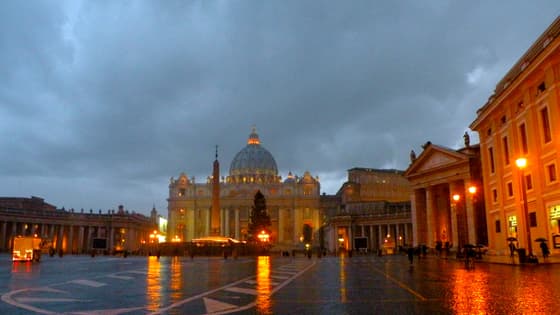
St. Peter’s Square deserves a special mention. It is certainly one of the most scenic squares in Rome, but it is located furthest from all the others and, above all, it is located in a “foreign” state: the Vatican City! Traveling even further from the center of Rome, you can admire Mincio square, the beating heart of the Coppedé neighborhood, a masterpiece of eclectic and Art Nouveau architectures.
Rome as a film stage
Your tour of Rome’s cinematographic world should begin right at Cinecittà , the neighborhood where the recording studios and sets are located. Once reserved for professionals, it is now open to tourists, who can admire the famous symbols of the best of Italian cinema.
In the city centre, one of the unforgettable locations of Italian films is Via Veneto, celebrated by Fellini but also by many American directors. Of course your tour will also include the Trevi Fountain, where Anita Ekberg took that famous dip, inviting Marcello Mastroianni to join her. Also nearby, Piazza di Spagna served as a set for films such as Roman Holiday, starring Audrey Hepburn. Rossellini and Pasolini filmed some of their films in the Pigneto neighborhood (Rome Open City, Accattone), now a trendy area for young people!
If you know and love modern Italian directors (Carlo Verdone, Nanni Moretti), you’ll find many of their scenes in the streets of the Testaccio neighborhood or in the “very Roman” streets of the Garbatella neighborhood.
What to admire along the Tiber?
Imagine following the flow of the river from the heart of the city to the sea… here’s what you’d see on this itinerary.
Castel Sant’Angelo, the famous fortress dominated by the marble angel overlooking the riverfront and the bridge of the same name was for a long time the residence of the popes and then a harsh prison. The museum inside today recounts the terrible tortures and battles that took place here!
“Sailing” west, you’ll find Tiber Island which bisects the river and was once home to important temples. Today it houses two hospitals and a large basilica dedicated to Saint Bartholomew. Opposite, the Synagogue with its museums, which can be visited for a fee.
The archaeological complex that includes the famous Mouth of Truth is located a little further away; here, brave tourists can stick their hand in the statue’s mouth and, if they’ve ever lied, feel the monster’s “bite” that will cut it off!
Testaccio and Trastevere are both fascinating neighborhoods where the streets, squares, and especially the restaurants are worth a visit. Seeing them both in a short time is impossible, so pick one and enjoy a stroll there!
Saint Paul Outside-the-Walls is a splendid, thousand-year-old basilica that stands precisely where the city once ended. Today, it is one of Rome’s most important religious monuments, with its garden, mosaics, marble, and magnificent golden ceilings!
Right by the sea, where the river meets the beach, finally lies Ostia Antica. This medieval village is a reminder that an important imperial port once stood here. Today, tourists can admire the remains of castles, churches, ruins of Roman buildings, and even a salt production site.
