<< In the souls of the hungry, the seeds of wrath have become grapes, and the grapes have become vineyards, now ready for the harvest >> . This is one of the iconic lines from the novel “Grapes of Wrath”, published in 1939 by American writer John Steinbeck. And if you loved classic films starring James Dean, you’ll surely also remember another of Steinbeck’s masterpieces, “East of Eden”, which became a worldwide success ( << Being a person implies a responsibility. Something more than simply occupying a certain space. >> ). The California described by this author—who was born and raised there—is not the usual stereotypical land of sun, sea, bikinis, and rock ‘n’ roll, but a harsh, cruel place made up of workers, poor and disadvantaged people. A new discovery that touches on famous locations, but seen from a different perspective.
A dark and rebellious California
John Steinbeck (1902-1968) was born in Salinas, a rural town located 170 km from San Francisco and only 95 km from San José—which today falls within the urban area of the same metropolis. Passionate about writing and poetry from an early age, he studied literature at Stanford University, and his stories drew inspiration from the adventurous life of his immigrant family (his grandparents were German and Irish) and their struggles for a better future. As a young man, he lived through the dramatic period of the Great Depression, which began in 1929, and detailed the plight of many families who found themselves impoverished overnight.
“His” California, therefore, in the 1930s once again became a myth to be conquered. Just as it had been in the days of the “Wild West”, throngs of desperate people flocked again to Los Angeles and San Francisco, no longer seeking gold but a job, perhaps the most precious treasure. Steinbeck’s novels depict a different California, a land of poor people, workers, farmers, and injustices to be fought. A totally new way to understand this American state… and experience it, if you want to follow a tourist itinerary in the footsteps of this writer.
Salinas
The itinerary certainly begins in Salinas, a city located in central California and the seat of Monterey County government. It can be reached in just an hour and a half’s freeway journey from San Francisco Airport (SFO) and an hour’s drive from the nearest regional airport, San Jose Mineta (SJC). It lies in the center of a fertile valley, one of the most important agricultural areas in the state and the entire nation, thanks to its favorable climate and the quality of its soil.
John Steinbeck was born here and here lived for much of his life; many of his literary works are set here. The most famous is undoubtedly “East of Eden”, in which the city of Salinas is actually named and described in detail, while in other works it is merely alluded to. Of course, several museums are dedicated to Steinbeck and his characters, and various events are held here every year. Salinas also boasts a Railroad Museum, with a scale model of the entire town, the Monterey Capitol building, and the First Mayor’s House. A short drive from the town’s center takes you to the ocean and the Salinas River Wildlife Park, overlooking the coast.
Monterey
Monterey is the county (region) headed by Salinas. It is located along California’s central coast and is one of the state’s most famous and fascinating areas. Steinbeck created several fictional towns for his stories within the county, and set the adventures of many of other characters in real-life locations of that territory.
One of the elements that makes Monterey County famous is its extraordinary natural landscape. The coast offers spectacular views of the Pacific Ocean, with cliffs, beaches, bays, and abundant marine life. The city of Monterey is particularly famous for its historic harbor and the Monterey Bay Aquarium, one of the most important aquariums in the United States. Numerous animals can be observed in the bay, including sea otters, seals, sea lions, and, in certain seasons, whales. South of Monterey lies the renowned Big Sur area, characterized by a wild and spectacular coastline. Here, the mountains meet the ocean, creating evocative landscapes that attract tourists, photographers, and nature lovers from around the world.
The county is also known for its agriculture. The fertile Salinas Valley is one of California’s main agricultural areas, producing large quantities of vegetables and fruits, particularly excellent plums and strawberries. Tourism is a new resource for the area, which has been promoted with particular attention since the 1970s thanks to seaside resorts such as Carmel-by-the-Sea, Pebble Beach, and Pacific Grove. These areas are appreciated for their beaches, architecture, golf courses, and elegant atmosphere.
Do you know the Joshua Tree National Park?
The adventurous story of the Joad family, the protagonists of “The Grapes of Wrath”, takes place mostly along Route 66, the famous highway that cuts across the central United States to California. However, the characters celebrate their entry into California at a particular moment: when they look out from the Arizona mountains and see, across the Colorado River, the land they have long dreamed of.
One of the first landscapes encountered when entering California from Arizona is Joshua Tree National Park. This territory, as large as one of the eastern states of the United States, has a unique charm due to its diverse landscapes: mountains (the San Bernardino Range), deserts (the Mojave and Colorado), rock formations, patches of succulent and thorny vegetation, and canyons. The arid landscape must not have seemed welcoming to those passing through for the first time, but it was nevertheless a open gate to the richest state in the USA and therefore an important destination in the past, both for Western pioneers and for the migrants of the 1930s.
To reach Joshua Tree National Park, use Los Angeles International Airport (LAX).
San Francisco and the California Central Valley
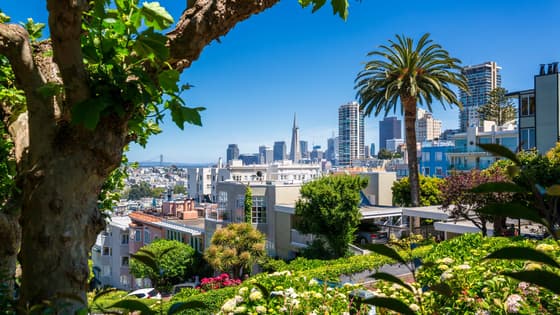
San Francisco needs no description. Its red bridge (Golden Gate), its hilly neighborhoods (Lombard Street) with their Victorian-style houses, its colorful cable-bus, its skyscrapers including the “pyramid” of the Transamerica Building, the Japanese Tea Park, Chinatown, the lively port… they are all vivid protagonists of many American films and TV series. And this is the favorite itinerary of those who vacation in California.
What you may not know about San Francisco is that it is the only “outlet to the sea” of the immense Central Valley, the gigantic tectonic plain that covers the entire central California from Bakersfield to Sacramento and all the way to Redding, in the far north. A fertile valley nestled between the mountains that can only admire the great blue ocean through the corridor that connects it to San Francisco. And this is where the thirst for freedom described in Steinbeck’s novels comes from… this oppression that is perpetually seeking an escape. And what is a better and more beautiful escape than… San Francisco ?