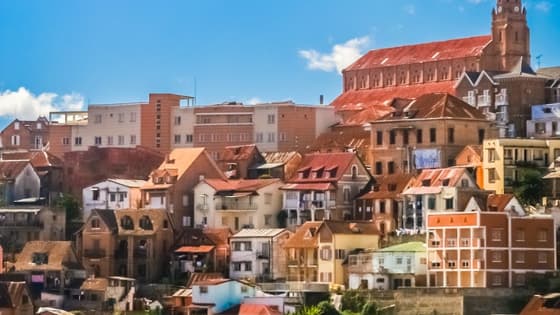
Why would a tourist book a vacation in Antananarivo, the capital of Madagascar, if this city is so far away from all the beaches and wild natural attractions of the large African island? To take an alternative and unique trip, first of all; to experience a different Africa, too; to create unique memories tied to Madagascar. And also because “Tana”—as the capital is known here—is a beautiful place.
Getting to “Tana”
Tana can be reached directly by landing at the modern Ivato International Airport (TNR). Madagascar’s main airport receives flights from all major African hubs and some major European cities and also handles domestic flights, essential for quickly reaching tourist destinations. From Ivato Airport, thanks to a variety of public transportation options, you can reach the main destinations in the capital region. But if you prefer more comfortable transportation, with drivers who also act as tourist guides, book a vehicle with Transfeero. A private transfer guarantees safety, speed, and above all, zero stress.
Remember! If you want to visit distant destinations such as Nosy Be, Antsirabé, Vatomandry, Morondava, or Mahajanga, you better book internal flights or safaris with local tour operators who can provide off-road vehicles better suited to the island’s rugged roads.
History of a capital
Antananarivo has a rich and fascinating history that dates back to the early 17th century. The city was founded around 1610 by King Andrianjaka, a ruler of the Merina people, who established it as the political and military center of his kingdom. The name Antananarivo means “City of a Thousand,” referring to the soldiers assigned to protect the settlement.
Located on a series of hills in the central highlands of Madagascar, Antananarivo quickly became an important strategic and economic center. During the eighteenth and nineteenth centuries, the Merina Kingdom expanded its influence across much of the island. Under rulers such as King Radama I and Queen Ranavalona I, the city developed into the heart of a powerful state. Royal palaces, tombs, and administrative buildings were constructed, many of which became symbols of Merina authority.
In 1895, Madagascar was colonized by France after a military campaign. Antananarivo became the administrative capital of the French colony and underwent significant urban changes. Roads, schools, hospitals, and government buildings were built, blending European and Malagasy architectural styles.
Madagascar gained independence from France in 1960, and Antananarivo remained the nation’s capital. Since then, it has continued to grow as the country’s political, cultural, and economic center. Today, the city is home to more than a million residents and serves as a gateway to Madagascar’s unique heritage. Its historic landmarks, vibrant markets, and diverse cultural traditions reflect centuries of change and development.
Tourist itineraries in Antananarivo
To begin any tour of Antananarivo, you must first… admire Antananarivo! The first stop will be the “royal hill” – Ambohimanga. Located 20 km from the center of the capital, it boasts an ancient fortress (the Rova) built with a mixture of sand, egg whites and shells, whose walls sparkle in the sun! From up there, the view of the city is a unique sight. Descending the hill, you can stop at the cathedral and at the Museum of Photography; do not miss a visit to the lively Analakely market. Enjoy the historic quarter, the “Haute Ville”, with its shops, artisan workshops, and eateries serving local cuisine.
A second itinerary could be dedicated to the capital’s natural beauty. The small protected reserves nestled within the urban area or on its outskirts offer a glimpse of the island’s wild nature you would usually see in more distant regions. Starting from the zoo in Tsimbazaza Park, you shall pass through Lemur Park – where you can admire the island’s friendly, iconic little animals – then admire the protected fauna of Tsarasaotra Park and the Madagascar Exotic National Reserve, all the way to Andasibe-Mantadia—a national park located a few kilometers outside the city.
A pleasant itinerary could be one around Lake Anosy, located in the heart of the capital. In addition to views of the skyline reflected in its waters, the lake park offers walking trails immersed in nature, but also close to the sports district, the university district, and some of the best restaurants in the city center.
Three-hour drive from the city…
The best beaches are far from Antananarivo, but there are charming places located not too far from the center. Within a three-hour transfer by car, you can visit places such as Lake Itasy, Ambatolampy, Tanimarina (gateway to the Anjozorobe Angavo reserve), or Mantasoa. Consider them interesting alternative trips, after your Transfeero city itinerary.
Lake Itasy is a jewel of volcanic origin, with a maximum depth of 10 meters. Located a short distance from the “Itasy volcanic field” it was formed by an eruption that dammed the course of two rivers, filling a basin whose water level rises or falls seasonally. Its distinctive color, an almost fluorescent green, is due to the unique vegetation on the lakebed.
Ambatolampy is a mountain district set near an ancient volcanic system. The local subsoil is exploited for the production of aluminum objects, which here, among these dark brick colonial houses, are the most sought-after souvenirs. To visit the Anjozorobe Angavo Nature Reserve, you have to head to the town of Tanimarina and then embark with guides on green trails populated by beautiful Malagasy wildlife. Mantasoa is famous for its vast rice fields which, when flooded, offer unforgettable views, especially at sunset. In the village, you can buy fine silks, porcelain objects, and weapons such as guns, rifles, swords —remnants of the ancient colonial weapon industry that developed here in the 19th century.
Famous beaches
The beaches are quite far away from Antananarivo. You have to travel a long way to get to Vatomandry and Mahanoro, for example, on the east coast.
Vatomandry is famous for its expansive beaches lined with coconut palms and lush vegetation. The town has long been a popular seaside retreat, attracting visitors who seek relaxation and scenic beauty. The waves of the Indian Ocean create a picturesque landscape, while the fresh sea breeze provides a pleasant atmosphere throughout the year. Visitors can enjoy swimming, beach walks, and opportunities to discover the local fishing communities that depend on the ocean for their livelihood.
Further south, Mahanoro offers equally captivating beaches with a quieter and more peaceful environment. Its coastline is characterized by golden sands, clear waters, and a tranquil setting that appeals to nature lovers. The surrounding area is rich in biodiversity, featuring tropical forests, rivers, and unique wildlife. Traditional villages near the coast allow travelers to experience the customs and daily life of the local population, adding a cultural dimension to the natural attractions.
Both Vatomandry and Mahanoro serve as gateways to the stunning landscapes of Madagascar’s east coast. Their beaches provide an ideal setting for relaxation, exploration, and appreciation of the island’s diverse environment. Whether enjoying the ocean views, observing local traditions, or simply unwinding by the sea, visitors to these coastal towns are rewarded with memorable experiences and a deeper connection to Madagascar’s natural beauty.