
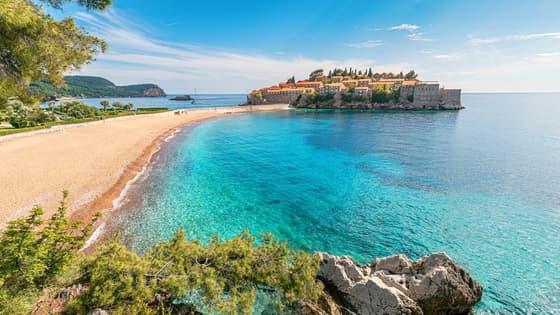
There is a small territory in the heart of Balkan Europe that not everyone knows about. Yet summer is a great opportunity to discover it, explore it, and learn to love it. Until the early 2000s, Montenegro was a region of Serbia; it recently gained independence and immediately launched its tourism industry. It can be reached by all means: via ferries from the Adriatic sea, by highways with connections from all over Europe, by train, and of course by airplane. The country’s most important airport is in the capital Pogdorica’s, also served by tourist connections from Dubrovnik International Airport (DBV). We suggest renting a car with a driver on site and using it for a road trip. You won’t regret it!
Montenegro by car: is it a good idea?
Montenegro is a small region that has it all: beautiful beaches, charming cities, mountains so densely forested that it seems this is where the name “Monte Negro” (dark mountain) comes from. A tour of the entire country takes just over five hours by car, and with a good vehicle—comfortable, fast, and with excellent onboard services—you can visit multiple destinations in a single day. Here we suggest a trip idea to quickly enjoy all the beauty of Montenegro on a summer day. Montenegro’s roads are comfortable, with minimal hassle, and the views are breathtaking.
Pogdorica
The capital of Montenegro is a city located in the central part of the country, near the confluence of the Morača and Ribnica rivers. Though not a metropolis, it is the country’s main political, administrative, and economic center and retains a charm reminiscent of Central European capitals. Over the centuries, Podgorica has been subject to various cultural influences, including Ottoman, Venetian, and Yugoslavian, and was heavily bombed during World War 2.
Today, this elegant, colorful city is home to important Montenegrin institutions, universities, museums, and numerous modern buildings. Among the most famous sights are the Millennium Bridge, spanning the Morača River; the Clock Tower in the historic Stara Varoš district; the Cathedral of the Resurrection; the Royal Palace. The city is also a great starting point for exploring the country’s mountains, lakes, and Adriatic coast.
Podgorica offers a tranquil atmosphere, with many parks and combines traditional elements with contemporary urban development. While it has recently seen growth in the service and infrastructure sectors, maintaining a relaxed pace of life, tourism is becoming more and more one of the most profitable economic drivers for residents.
From Pogdorica to Virpazar (Lake Skadar)
A half-hour drive from the capital takes you to Lake Skadar. One of the key urban centers for this lake, which Montenegro shares with Albania, is the town of Virpazar. The lake lies approximately 10 meters above sea level, in a karst depression measuring 48×14 km and reaching a depth of 60 meters. Home to numerous species of birds, both migratory and resident, it offers fascinating views and beaches suitable for relaxation!
Virpazar has existed since the 13th century and has retained its medieval appearance of stone houses, wells, bridges, and bell towers almost intact. Outside the center, the Besac Fortress—built by the Ottomans in 1478 to control trade—stands proudly, now restored; it can be reached via a short climb along a path lined with cypress trees and offering a wide panoramic view of the village. Tastings, market shopping, and boat trips on the lake are the activities that await you in this magical location.
From the lake to Durmitor National Park
Resuming your journey, head north and in just over two hours’ drive you’ll reach Durmitor National Park. The park takes its name from the mountain that towers above it, a name derived from the Latin “dormitory”, because shepherds would rest here with their flocks!
Established in 1952, the national park offers uniquely beautiful trails that include canyons, forests, and streams. Among the most beautiful attractions are the Tara River Gorge, the glacial lakes (at an altitude of 1,450 meters), the “eyes of the mountain”—lakes that stand out among the green forests—and Crna Poda, a wood of giant black pines (each reaching 50 meters in height).
Strolling through Durmitor National Park, you may encounter majestic animals such as wolves and bears, as well as wild cats, eagles, horses, and birds. Durmitor National Park is also a UNESCO World Heritage site.
Montenegro’s beaches
Returning from Durmitor National Park to the coast, you’ll finally discover Montenegro’s beaches. Their appearance is an almost perfect blend of the Apulian and Greek coasts, but with a more Nordic touch. A three-hour drive with your trusty driver will take you to the sea, where you can choose the perfect beach for you. Here are some of the most famous.
Mogren, near Budva, is one of the most picturesque bays on the Adriatic coast. Its crystal-clear waters and golden sand attract visitors seeking relaxation and natural beauty. Surrounded by cliffs and Mediterranean vegetation, it offers a tranquil and captivating landscape. The scenic path leading to the beach offers spectacular views of the blue sea and surrounding mountains.
Nearby, Bečići Beach combines tranquility and modern amenities, with hotels, restaurants, and activities for tourists of all ages. During the summer, the place comes alive with local events and entertainment opportunities. The surrounding hills also make Bečići a popular destination for trekking enthusiasts and anyone wishing to discover the authentic natural beauty of Montenegro.
Petrovac, also known as Petrovazzo, is one of Montenegro’s most charming coastal towns. Located in the southern part of the country, it offers a landscape characterized by clear waters, green mountains, and a tranquil atmosphere. Its main beach is made up of small pebbles and sand, and is surrounded by a seaside promenade lined with restaurants, bars, and small shops. Petrovac is an ideal destination for those seeking relaxation and natural beauty without the chaos of more crowded resorts. From the coast, two small islands, Katič and Santa Nedjelja, can be seen, making the view even more evocative. In addition to the beach, the town preserves historical relics such as the Venetian fortress of Castello.
Velika Plaža, stretching over 12 kilometers, is one of the largest sandy beaches on the Adriatic. Its landscape is characterized by fine sand, shallow waters, and wide natural spaces, making it an ideal destination for families, relaxation seekers, and water sports enthusiasts. During the summer, Velika Plaža attracts visitors from many countries thanks to its tranquil setting and the opportunity to enjoy activities such as kitesurfing, windsurfing, and strolling along the shore. The surrounding area also preserves important natural areas, with dunes, Mediterranean vegetation, and habitats frequented by various bird species. Beyond the beauty of the sea, the area offers an authentic cultural atmosphere linked to the nearby city of Ulcinj.
