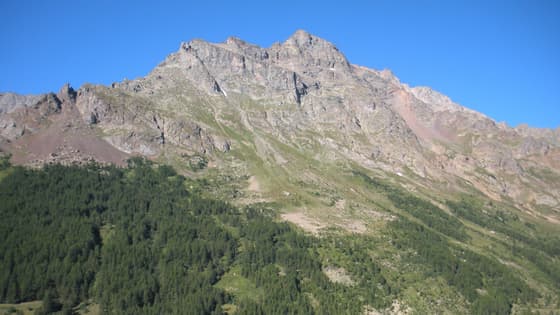
The roof of Sardinia, or rather the island’s highest point, is located within the Gennargentu massif, a mountain range located off the island’s eastern coast in the district of Nuoro-Ogliastra. Among its many peaks, Punta La Marmora (1,834 meters above sea level) stands out. In Sardinian, it’s called Perda Crapìas—meaning “broken rocks”—and is the highest, overlooking both the inland landscape and the coast of Tortolì. We suggest you book a holiday right here! Certainly different from places such as Porto Torres, Cagliari, or Porto Cervo—where beaches, glamour, and fun are the watchwords—here you get a different vision of the island, less noisy, less “trendy,” yet deeply intertwined with nature and ancient memories. It is worth a try, especially because… after all… if you want, you can still reach the most famous locations at any time (they are less than two and a half hours away by car).
How to get there
In order to reach Gennargentu and Punta La Marmora, after landing at Cagliari Airport (CAG) or Olbia Costa Smeralda Airport (OLB), you should rent a transfer with a driver. Public transportation in Sardinia is efficient, but the roads are difficult, and delays can often occur. Because of the complexity of the roads, renting a car isn’t a good idea: instead, hire a good driver who can also act as your tourist guide. Both Olbia and Cagliari are two-hours drive away from Arzana, the reference town for any Gennargentu vacation. Remember that there are no highways in Sardinia!
Arzana: the climb begins
Immersed in mountain forests, among holm oaks and pines, Arzana is the launching pad for all treks to and from the Gennargentu range. Booking accommodation here is ideal if you want to base yourself right on the roof of Sardinia. The climate is cool, the atmosphere peaceful, the people welcoming, and many tour operators organize excursions to Punta La Marmora, which falls within the town’s municipal area. During your trips to the highest peak, you can also visit magical places such as the Nuraghe di Ruinas archaeological site, the Alto Flumendosa lake, and the “old man” Ilice ‘e Perreddu—one of the oldest trees in Europe. The historic core of Arzana is adorned with small ancient churches, stairways, and arches.
Circling Punta La Marmora
Starting from Arzana, you can almost completely circle the Punta La Marmora massif. In an hour and a half’s drive, you will visit numerous charming villages dotting the mountain’s slopes and reach other places steeped in Sardinian tradition.
After a fifty-minute drive, you’ll get to Fonni, the “little heart of Sardinia” located right in the middle of the island’s hinterland. “Fonni, with its splintered houses and stone paths, defies wind and lightning,” Nobel Prize-winning Sardinian poet Grazia Deledda described this place. And amidst the storms, the village’s historic center offers wonderful surprises, such as the Museum of Shepherds Culture and the spectacular Basilica of Madonna dei Martiri (Our Lady of Martyrs). Located at 1,000 meters, Fonni is also the highest municipality in Sardinia.
Just over a half-hour drive from Fonni will take you to Desulo: here, time seems to have stood still, as you can see people walking around dressed in traditional Barbagia costumes —colorful, embroidered with precious fabrics, such as velvet, damask, and scarlet (a red woolen cloth). The stone alleys, the houses with painted window frames, the stairways, and the small squares will lead you to discover the three historic quarters: Issiria, Ovolaccio, and Asuai.
From Desulo, one last “effort”… another thirty minutes by car along curves and ridges… to reach the magic of the ancient days: the Giants’ Tomb of Sa Tanchitta. Located in the Forest Girgini area, southeast of Desulo, it is a Nuragic dolmen-type tomb dating back to the Bronze Age. The “giants’ tombs” are usually imposing rectangular structures ending in a semicircular apse, built with large stone blocks planted in the ground. In this case, only the blocks and the outline of the burial chamber remain, clearly distinguishable among the ruins.
Do you know Punta La Marmora?
The climb to Punta La Marmora, from Arzana, is highly popular with hikers, as it offers trails immersed in pristine nature, including woods, pastures, and evocative rock formations. Along the way, you can observe numerous plant species typical of the Mediterranean scrub and Sardinian mountains, as well as a rich fauna that includes mouflons, golden eagles, and other wild animals.
From the summit, you can enjoy an extraordinary panorama: on clear days, you can see much of Sardinia, including both the eastern and western coasts. This makes Punta La Marmora an ideal destination for photography and nature lovers. The climate varies considerably with the seasons. In winter, the peak can be snow-capped and temperatures are very cold, while in summer the air is cool and pleasant, offering a refuge from the heat of the coastal areas.
Beyond its scenic value, Punta La Marmora is also environmentally significant because it is located within the Gulf of Orosei and Gennargentu National Park, an area of great natural interest.
Gulf of Orosei and Gennargentu National Park
The Gulf of Orosei and Gennargentu National Park is one of Sardinia’s most fascinating natural areas. Located in the central-eastern part of the island, it encompasses highly diverse landscapes, ranging from the high mountains of the Gennargentu massif to the spectacular coastline of the Gulf of Orosei. This area represents a precious environmental heritage, characterized by extraordinary biodiversity and numerous animal and plant species, some of which are endemic, meaning found only in Sardinia.
The Gennargentu mountains are home to forests of holm oak, juniper, and yew, as well as vast areas of Mediterranean scrub. Animals such as the mouflon, golden eagle, Sardinian wild boar, and numerous birds of prey live here. Along the coast, high limestone cliffs overlook the crystal-clear sea, interspersed with coves of rare beauty, such as Cala Luna, Cala Mariolu, and Cala Goloritzé. These beaches can be reached primarily by sea or via scenic trails popular with hikers. The park is also rich in historical and cultural heritage. Its territory features ancient archaeological sites from the Nuragic civilization, traditional sheepfolds, and small villages that preserve centuries-old customs, crafts, and traditions. Local economic activities, such as sheep farming and cheesemaking, are still closely linked to the area today.
Visiting the Gulf of Orosei and Gennargentu National Park means immersing yourself in a pristine environment, where nature, history, and culture coexist in perfect balance. Protecting this area is essential to preserving a unique heritage and ensuring that future generations can continue to admire its extraordinary beauty and exceptional natural value.