
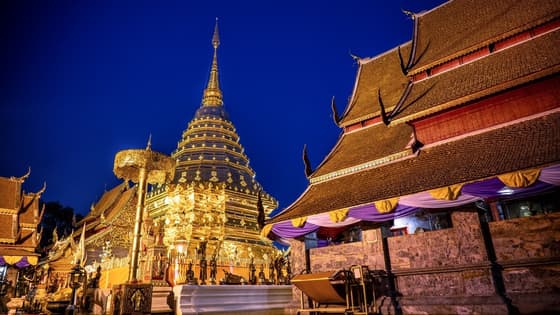
Thailand is one of the top tourist destinations in February. In this corner of the world, where winter doesn’t exist, you can spend a few weeks under the tropical sun, perhaps lounging on a hidden beach or exploring dreamlike locations. Chiang Mai, although far from the tropical sea, is one such dream places. Located in the north of the country, sandwiched between Myanmar and Laos, this region rich in natural wonders is served by its own regional airport with excellent connections to and from Bangkok Airport (BKK). To explore these lands, nothing is better than a chauffeured transfer, organized in advance through an efficient and direct website like ours, Transfeero. Treat yourself to the ideal winter-2026 vacation with us!
The Capital of the North
Chiang Mai (the Rose of the North) is a large city, the most populous in northern Thailand, a sort of “capital” that won’t make you miss Bangkok – located 700 km away. It governs the region of the same name, crossed by the Ping and Chao Phraya rivers, where fields blend with mountain forests. The ideal time to visit this area is December-March, before the intense, hot humidity assails the atmosphere. Perennially contested by kingdoms and nations, Chiang Mai has been an integral part of Thailand since the early 20th century and is now increasingly becoming an attractive tourist destination. The reason is easy to explain: less congested and polluted than Bangkok, it nevertheless offers the same number of historical and artistic monuments, the same ancient charm, and the same opportunities for those who love nature adventures. All this, however, at a lower cost and with zero stress!
What to see at Chiang Mai City
The primary attractions of Chiang Mai, as in Bangkok, are the numerous and precious temples (wat) that dot the historic center. The oldest is the 13th-century Wat Chiang Man, which contains immense works of art in marble, crystal, and gold. Wat Phra Singh and Wat Chedi Luang are the finest examples of the city’s refined medieval architecture. The more famous, gilded Wat Phrathat Doi Suthep (14th century), is located outside the city’s historic heart, on a hill 15 km northwest and can be reached by a flight of over 300 steps or via the scenic paved road.
The historic heart of Chiang Mai also boasts four famous markets, all lively and colorful both day and night. If you are looking for tourist shopping or to sample local specialties, stroll through the streets of the Nimmanhaemin area. A lovely riverside stroll, past restaurants, shops, and ultra-luxury hotels, can be enjoyed in the “Riverside” quarter. Don’t miss the opportunity to visit the large Chiang Mai Zoo.
What to see in the Chiang Mai region
The city of Chiang Mai is the starting point for numerous excursions, or “safaris,” in the surrounding region. A two-hour drive from the city center, you can explore the incredible Doi Inthanon National Park, a sanctuary for elephants and tropical plants, where you can also experience visits to tribal villages and admire spectacular waterfalls. Keep immersing yourself in the wonders of nature, go explore the “must-see” Elephant Park. Here, pachyderms live freely, happy in their ideal environment, and tourists can observe them from a distance with the reassuring guidance of local rangers.
But the Chiang Mai region offers much more. Another “must-see” is Chiang Rai, a city famous for its temples—more modern but decorated with a unique sculptural skill. The stone facades are carved with such perfect details, meticulousness, and elegance that they seem covered in lace or fine hair blowing in the wind! The White Temple and the Blue Temple, in particular, are works of art of indescribable beauty. The Chiang Mai region also includes the “Golden Triangle”, a mountain area where the borders of Thailand, Laos, and Myanmar almost meet: the gold to which the name refers is opium, the substance extracted from poppies that has generated enormous trade and prosperity here. Despite the “dangers”—given that governments are attempting to eradicate these plantations against the will of residents—the beauty of the landscapes is worth a trip. However, always rely on highly experienced local guides and never try to go there on your own.
How to plan your trip to Chiang Mai
For a February vacation in Chiang Mai, we suggest packing mainly summer clothes, though evenings there can get chilly (and you might also need a jacket or sweater). You should always find clear skies and a cool temperature, but it’s important to bring insect repellent—insects are prevalent here even in the absence of monsoons. Bring good cameras, drones, or cell phones, because photographing the spectacular monuments of this region is the best gift you can give yourself.
