
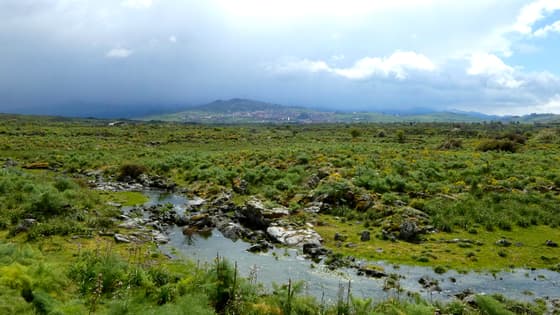
Take advantage of the quiet autumn weather to enjoy the super-tourist destinations without stress, with beaches and monuments all to yourself and no crowds. But autumn is also the ideal season to explore some interesting areas that tourists don’t usually attend. Though they actually deserve just as much attention. Let’s take, as an example, four very famous European holiday islands: Sicily, Sardinia, Corsica, and Mallorca. Forget for a moment the sunny beaches, the boats, the waterfront pubs… and immerse yourself in hidden and beautiful areas. The reference airports, for these specific itineraries, are: Palermo Airport (PMO), Alghero Airport (AHO), Ajaccio-Bonaparte Airport (AJA), and Palma de Mallorca Airport (PMI).
Inland Sicily: Caltanissetta, Aragona, St. Stefano Quisquina
When traveling to the Sicilian hinterland, the usual destination is Enna, a wonderful medieval capital full of fascinating monuments. But we’d like to invite you to discover Caltanissetta instead. A city, also district capital, a bit out of the way and wrongly considered uninteresting.
The Cathedral, the Church of St.Agata, the baroque Church of St. Sebastian, and the ancient churches of Santa Maria degli Angeli and Santo Spirito are certainly worth a visit. The historic core is well-maintained and always elegantly decorated, offering tourists splendid palaces (16th-19th centuries) and public parks (here called “Villas”), as well as the monumental RAI television antenna, a true example of industrial archaeology almost 300 meters high! There’s no shortage of archaeological sites, such as Gebil Gabib, Sabucina, and the ruins of the ancient Sulfur Mines.
Moving southwest, it’s certainly worth stopping in Aragona (near Agrigento), an ancient medieval town famous for its mud volcanoes, which may erupt fountains of sulfurous mud up to great heights. Also very charming is St. Stefano Quisquina, also in the territory of Agrigento. This ancient village, rich in churches, boasts a medieval castle and a modern theater built in the style of ancient Greek theaters. Overlooking the valley at an altitude of 1,000 meters, Andromeda Theatre (click here) offers unique performances to a lucky few who reserve in advance the limited seats available … but the sunsets are for everyone to see!
Sardinian Inland: Bitti, Oliena, Macomer
The quintessential Sardinian hinterland is called Nuoro and Barbagia. Among wild pastures, sun-drenched nuraghes, and dry-stone walls, villages and festivals fill perhaps the least touristy part of the island with beauty.
In Bitti, whose name is linked to the legend of a doe, you’ll admire medieval churches and an entire Nuragic complex—Romanzesu—with a sacred well, a hundred huts, two megaron temples, a rectangular temple, an elliptical stepped amphitheater and a labyrinth. Oliena, in autumn, opens its courtyards to the curiosity of tourists: a festival dedicated to the “Corti Aperte” (Open Courts) fills this town… now famous for its beautiful murals and views of the Supramonte peaks … with more color and tradition.
Macomer, by Sardinian standards, is already a city! Many churches with their bell towers dot the historic quarter, but the beauty of this town lies in the many Nuragic sites surrounding it: Funtana Ide, Ascusa, Succoronis, Sa Crabarza, and Tamuli are just a few of the hundreds of ruins that can be seen in the surrounding area.
Corsica’s Inland: Corte, Regional Park, Zonza
Corte was the ancient capital of Corsica and was a key hub for travel and trade in the Middle Ages, before handing over to Ajaccio. Today, it is a hub for those seeking an inland vacation, far from the “normal” Corsica. Its spectacular Citadel dominates the valley from atop a rocky spur.
Stretching across a quarter of Corsica’s hinterland, the Corsica Regional Park is a collection of stunning mountain landscapes where, amidst rivers, lakes, and peaks, you can admire the Scandola Reserve, the Turtle Village, and the Fango Valley Biosphere. Wild boars, eagles, and the beautiful Sardinian deer are among the privileged residents of this enchanting place. Over 150 municipalities are located within the park, including the center of Zonza. This medieval village perched 900 meters below the rocky walls of Bavella boasts Europe’s highest racecourse besides its romantic alleys, bridges, and ancient churches!
Inland Mallorca: Santa Maria del Camì, Petra, Santa Margalida
If you dare to leave the splendid beaches of Mallorca, you’ll discover the town of Santa Maria del Camì in its immediate hinterland. The historic core immediately stands out with its church bell tower decorated with blue tiles, the elegant town hall and the lively Plaza de los Hostals. All around the town are the vineyards for which Santa Maria is famous throughout the archipelago. The wines are excellent and both visitors and tourists can have a tasting at the Festa del Vi Novell in November.
In the heart of Mallorca, you’ll find Petra, 43 km from Palma de Mallorca. This small town is known for its Gothic-style buildings, small churches, and medieval palaces with a slender, airy style. Birthplace of a famous Mallorcan figure, the Friar Junípero Serra Museum offers insight into the life and works of this much-loved missionary.
Return to the coast, by descending along the road that leads to Santa Margalida. Here you’ll admire the unique windmills, the church of Sineu, and above all the Son Real Necropolis, part of a tourist route that also includes the necropolis of Illot des Porros, a dolmen, and the tombs of Punta Fenicis.
