
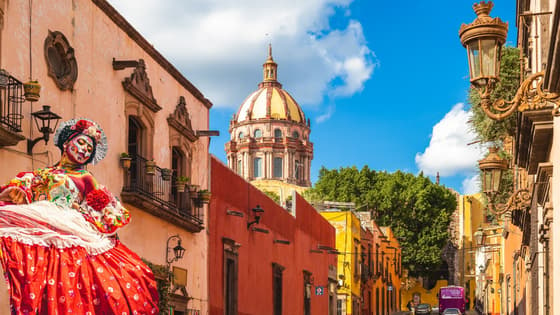
Tired of the “usual” Halloween or the dull Catholic traditions dedicated to the Saints and the Dead Souls? If so, this year, book a trip to Mexico during the time of the year when these three celebrations intertwine. There is something truly unique about the way this country honors the departed; it goes beyond the now-standard blend of the Celtic pumpkins and Catholic souls. Instead, it involves dark, mysterious rituals that add a whole new layer of intensity. In Mexico, it’s they call it Día de los Muertos (Day of the Dead Ones) —but it’s not just one “día” (day); it spans three, beginning on October 31st and continuing—amidst skulls, ghosts, and crucifixes—until November 2nd. Where, exactly? That’s what you are going to discover.
The “Indios” tradition that endured
Mexico is a land where dozens of distinct cultures have woven together—most recently that of the United States, brought by an influx of immigrants from this northern neighbor. Before that, Christianity—and Catholicism in particular—had left its indelible mark on the local culture. And long before all of this, it was the indigenous Indios cultures that held sway. The common thread connecting everything during this week in late October is death itself. The ghosts of Halloween merge with the souls of the saints from the Catholic tradition, which in turn intertwines with the human-sacrifice rituals of pre-Columbian tribes—long associated with skulls, bones, and dark magic. Yet, in Mexico, this collection of macabre rites takes on a new face made of vibrant colors and lively music.
Dia de los Muertos: what is this feast about?
The Día de los Muertos, or Day of the Dead, is a colorful and meaningful celebration in Mexico that honors family members and friends who have died. It is mainly celebrated on November 1st and 2nd, although preparations often begin several days earlier. Since the celebration time begins on October 27th or 28th, it has naturally included Halloween as well.
Unlike a sad occasion, Día de los Muertos is a joyful time when families remember their loved ones and celebrate the lives they lived. This is why colors and music will be the protagonists of the event. One of the most important traditions is creating an “ofrenda”, or altar, in homes and cemeteries. Families decorate the altars with photographs of deceased relatives, candles, flowers, and objects that remind them of the person. Marigolds, known as “cempasúchil”, are especially important because their bright color and strong scent are believed to help guide the spirits back to their families.
Food also plays an important role in the celebration. Families often prepare their relatives’ favorite dishes and place them on the altar. A traditional food is “pan de muerto”, a sweet bread decorated with shapes that represent bones. Other common foods include tamales, mole, fruit, and hot chocolate. People also decorate their faces with colorful designs inspired by “calaveras”, or skulls. The famous Catrina figure, an elegant skeleton wearing beautiful clothes, has become one of the best-known symbols of the holiday. In many towns, people take part in parades, music, dancing, and public celebrations.
Dia de los Muertos in San Miguel Allende
The best and most famous Día de los Muertos’ celebration is organized in a beautiful town of Guanajuato region: San Miguel Allende . Each year, the historic quarters of the city become a vibrant feast dedicated to memory, family, and the lives of loved ones who have died.
Throughout San Miguel, streets, homes, hotels, and public spaces are decorated with ofrendas. These beautiful displays often include photographs, candles, food, pan de muerto sweets, and bright orange marigold flowers. The flowers and candles symbolically help guide the spirits of the departed home. Visitors can experience these traditions, but it is important to remember that these moments are sacred to families so you should always enjoy the event with respect and kindness.
The city of San Miguel also adds a spectacular public dimension to the holiday. In fact, it hosts music, theater, workshops, art, outdoor films, altar exhibitions, and the famous “Desfile de Muertos y Catrinas”. The parade is usually scheduled for November 2, traveling from different points of the Old Town. This year, the parade should start from Del Cardo street to the Jardín Principal, where elaborately dressed Catrinas, musicians, and dancers will dance together.
Ultimately, Día de los Muertos in San Miguel de Allende is more than a colorful festival. It is a celebration of remembrance and connection, where the past becomes part of the present and the city comes together to honor life, love, and family.
More Dia de los Muertos festivals…
San Miguel is not the only place that brings a festive spirit to the Día de los Muertos celebration. Many other Mexican towns compete to attract tourists during this time.
If you want the best nightlife, Oaxaca is your place. The feast goes on among masked dancers, music, giant figures, sand paintings, decorated cemeteries and family ofrendas filled with sweets. Nearby Santa Cruz Xoxocotlán is also famous for its candlelit cemetery vigil.
Around Lake Pátzcuaro, a special Dia de los Muertos is held by the Purépecha communities with colourful dances and dinners, especially in towns such as Tzintzuntzan.
Mixquic, in southeastern Mexico City, is famous for its Alumbrada, when the cemetery fills with candles as families remember their dead. Pomuch, instead, is famous for its traditional Maya rituals. Here, families clean and rewrap the bones of deceased relatives before Día de Muertos, alongside food and offerings.
How to get to San Miguel
The closest major airport is Querétaro International Airport … about 75 kilometers away, or León/Guanajuato International Airport (BJX), located approximately 95 kilometers from San Miguel de Allende. But most tourists land directly at Mexico City International Airport (MEX).
If you are arriving from Mexico City, 269 km away, you can travel by long-distance bus, rental car, or private transfer. A private transfer with a driver is the perfect choice, since you will enjoy a comfortable and easy trip – lasting approximately three to four hours. Once you arrive, the historic center is compact and easy to explore on foot. Many attractions, restaurants, shops, and hotels are within walking distance. If you want to follow all the events dedicated to the celebration, though, you better use your reliable private transfer with a chauffeur. Our service will give you the quality you were looking for.
