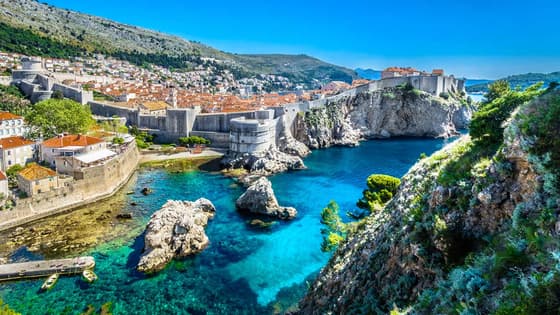
Dubrovnik, also called Ragusa or Ragusi, is a fortified town of Croatia whose name means “the cliff”. It is set, in fact, on a small cliff overlooking the Adriatic Sea and was founded by people from southern Balkans escaping persecutions. The old town, a UNESCO World Heritage Site, is surrounded by strong stone walls that visitors can walk along while enjoying panoramic views. Inside the walls, narrow streets, small squares, churches, and traditional houses create a unique atmosphere. Stradun, the main street, is a popular place for walking, shopping, and relaxing in cafés. Dubrovnik also has beautiful beaches and clear blue water, making it an attractive destination during the summer. The city became even more popular after being used as a filming location for the television series Game of Thrones. With its rich history, beautiful architecture, Mediterranean climate, and spectacular coastal scenery, Dubrovnik offers visitors an unforgettable combination of culture, nature, and relaxation.
When to go to Dubrovnik?
The best time to visit Dubrovnik depends on the kind of holiday you prefer. Late spring, especially May and June, is ideal because the weather is warm and sunny, while the city is usually less crowded than in peak summer. September and early October are also excellent choices, offering pleasant temperatures, warm sea water, and fewer tourists. July and August are the busiest and hottest months, making them perfect for beach lovers and visitors who enjoy a lively atmosphere, but accommodation can be more expensive. Winter is much quieter and cooler, providing a different experience of the historic city. Overall, spring and early autumn offer the best balance of good weather, lower prices, and manageable crowds.
How to get to Dubrovnik?
Dubrovnik has an airport where, especially in summer, land most part of the charter flights of Europe. The Dubrovnik-Cilipi Airport was first opened in 1936, 19 km south of the city. It is well connected with downtown Dubrovnik by bus lines, taxis and private transfers. This is the best way to get to the city, since there is no railway at all and only one street (the Adriatica) to connect it with the rest of the nation. The airport has regular connections with many major European cities, especially during the summer season.
Another option is travelling by car or bus. Dubrovnik has good road connections with other Croatian cities and neighbouring countries. Buses regularly arrive from Split, Zagreb, and several international destinations. Travelling by road can also be a great opportunity to enjoy the beautiful coastal scenery. Of course you can also hire our vehicles with a chauffeur for your comfortable and cosy transfer “on demand”.
During the tourist season, Dubrovnik can also be reached by ferry or boat from some Adriatic destinations. Travelling by sea offers spectacular views of the coastline and the historic city walls.
Here is how you will move in the city
Dubrovnik is a compact and beautiful city, and there are several convenient ways to move both within the city and around the surrounding area. The historic Old Town is entirely pedestrianised, so the best way to explore it is on foot. Walking allows visitors to discover its narrow streets, historic buildings, squares, and hidden corners at their own pace. Comfortable shoes are recommended because many streets are steep and include numerous stairs.
For destinations outside the Old Town, public buses are an efficient and affordable option. Dubrovnik has a good local bus network connecting the Old Town with neighbourhoods such as Lapad and Babin Kuk, as well as the main bus station and other parts of the city. Tickets can generally be purchased in advance or directly from the driver. Taxis and ride-hailing services are also available and can be useful for travelling with luggage or reaching places less conveniently served by buses. However, they are usually more expensive than public transport. Renting a car can be helpful for exploring the wider Dubrovnik region, including smaller coastal towns and more remote attractions, although parking in and around the city centre can be difficult and costly.
Boat services provide another enjoyable way to travel. Ferries and excursion boats connect Dubrovnik with nearby islands, including Lokrum, and other destinations along the Adriatic coast. For visitors who want to see the city from a different perspective, the cable car to Mount Srđ is also a popular option, offering spectacular views over Dubrovnik and the surrounding coastline. Overall, walking and public transport are usually the easiest ways to get around Dubrovnik.
Things and places to see
Museums are the main attraction of this beautiful city. There are many – Marine Museum, Archaeologic Museum, Historical, Photography … – but the most important and precious is the Religious Museum, keeping the Cathedral’s Treasure. Besides the museums, the whole Old Town, a UNESCO World Heritage Site surrounded by massive stone walls, offers a lot more to visit.
Walking along the city walls offers unforgettable views of the orange rooftops, narrow streets, and the sparkling Adriatic Sea. Stradun, the main street of the Old Town, is perfect for a leisurely walk. Visitors can admire important landmarks such as the Rector’s Palace, the Franciscan Monastery, and the Cathedral of the Assumption. The city is also home to many charming squares, cafés, restaurants, and small shops. For an even more impressive panorama, visitors can take the cable car to Mount Srđ, which overlooks Dubrovnik and the surrounding islands.
The region around Dubrovnik also offers many wonderful places to discover. Lokrum Island, located just a short boat ride from the city, is ideal for swimming, walking, and relaxing in beautiful natural surroundings. The Elaphiti Islands are another excellent destination, especially for those who enjoy peaceful beaches, clear water, and boat trips. A visit to Cavtat, a picturesque coastal town south of Dubrovnik, is also highly recommended. Its beautiful waterfront promenade, historic center, and relaxed atmosphere make it a perfect place for a day trip. Nature lovers can explore the Konavle region, known for its green countryside, traditional villages, vineyards, and local food. Further north, the Pelješac Peninsula is famous for its wine production, charming villages, and fresh seafood. The historic town of Ston is particularly interesting because of its impressive defensive walls and traditional oyster farms. Whether visitors are interested in history, culture, nature, beaches, or gastronomy, Dubrovnik and its surrounding region offer a rich and unforgettable travel experience.