
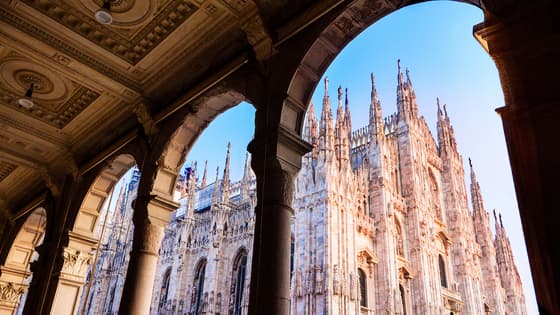
Milan is one of Italy’s most important and dynamic cities, known for its history, fashion, culture, and modern lifestyle. Located in northern Italy, it is the capital of the Lombardy region and a major center for business and finance. Milan is famous around the world for its elegant fashion industry and hosts important events such as Fashion Week. The city also offers many beautiful historical attractions, including the magnificent Duomo di Milano, one of the largest cathedrals in Europe. Visitors can walk through the Galleria Vittorio Emanuele II, admire Leonardo da Vinci’s famous painting, The Last Supper, and explore interesting museums and art galleries. Milan has a lively atmosphere, with excellent restaurants, cafés, shops, and nightlife. It is also an important transportation hub, making it easy to travel to other Italian and European destinations. With its combination of ancient traditions, artistic treasures, innovative architecture, and international energy, Milan is a fascinating city.
When to go to Milan
Milan is a great city to visit throughout the year, but the best time depends on your interests. Spring, from April to June, is often considered ideal because the weather is mild and the city’s parks and streets are especially pleasant. Autumn, particularly September and October, is another excellent choice, with comfortable temperatures and fewer tourists than during the busiest summer months. Summer can be hot and humid, especially in July and August, and many local businesses may close for holidays in August. However, it is a good time for visitors who enjoy a quieter city. Winter is colder and sometimes foggy, but Milan is beautifully decorated during the Christmas season and offers excellent shopping, museums, and cultural events. Fashion lovers may want to visit during Milan Fashion Week. Overall, spring and early autumn provide the best balance of pleasant weather, sightseeing opportunities, and lively city life.
How to get to Milan?
Center of economic Italy, Milan is perfectly and quickly reachable. By car you can arrive via several direct highways: the A4, A1, A7, A35, and again A8 and A9. In addition to dozens of intercontinental and regional roads. No problem for those arriving by train, thanks to the many stations – Centrale, Lambrate, Garibaldi, Rogoredo and Cadorna – which help disposing of the traffic.
Two large airports serve Milan: Malpensa and Milan Linate. Sometimes the city also relies on the airport of Bergamo. Malpensa is the larger airport and mainly handles international and long-haul flights, connecting Milan with destinations around the world. Linate Airport is closer to the city center and is especially convenient for domestic and European flights. Both airports offer important transport connections and modern passenger services. Malpensa and Linate are connected to the city by shuttle services, buses and trains, and of course by the many taxis, car rentals and private transfer services. Together, they play a significant role in tourism, business, and travel throughout northern Italy and beyond.
How to move in Milan?
Milan is large but the road network and transports are well managed. Moving along its metropolitan area is quick and easy. In addition to city buses and cable, you can take the underground train (4 lines and 113 stations). Many taxis will be at your disposal, while the cycle paths are a little less present, even if they are fairly organized.
Public transportation is one of the best ways to travel because it is convenient, relatively affordable, and widely available. The city has an extensive network of metro lines, trams, buses, and suburban trains. The metro is usually the fastest option for travelling between different areas, while trams and buses are useful for reaching places that are not close to a metro station. Tickets can be purchased at stations, authorized shops, or through mobile apps. Private transportation is another possibility. Many people use cars, motorcycles, bicycles, or electric scooters to move around the city. However, driving in Milan can be difficult because of traffic, limited parking, and restricted traffic areas. For this reason, car-sharing and bike-sharing services are popular alternatives. Taxis and ride-hailing services can also be convenient, especially at night or when carrying luggage.
Walking is an excellent choice in the city centre, where many famous attractions are close together. Overall, combining public transportation with walking, cycling, or shared mobility services is often the easiest and most sustainable way to explore Milan.
What will you see and visit
Milan is one of Italy’s most exciting and elegant cities, offering visitors a fascinating combination of history, art, fashion, and modern life. One of the first places to visit is the magnificent Duomo di Milano, the city’s famous Gothic cathedral. Visitors can admire its impressive architecture from the square and climb to the rooftop for spectacular views across Milan.
Near the Duomo is the Galleria Vittorio Emanuele II, one of the oldest and most beautiful shopping galleries in the world. With its glass roof, elegant cafés, and luxury boutiques, it is a perfect place for a walk. Milan is also internationally known as a capital of fashion, and the nearby Quadrilatero della Moda is home to many famous designer stores.
Art lovers should not miss Leonardo da Vinci’s The Last Supper, located in the convent of Santa Maria delle Grazie. This world-famous masterpiece is one of Milan’s greatest cultural treasures. Another important attraction is Castello Sforzesco, a historic castle that now contains several museums and art collections. Behind the castle, Parco Sempione offers a peaceful green space where visitors can relax. For lovers of music and theatre, Teatro alla Scala is an essential destination. It is one of the world’s most famous opera houses and has welcomed many legendary performers. Visitors can also explore the lively Navigli district, known for its picturesque canals, restaurants, bars, and vibrant atmosphere, especially in the evening.
Finally, Milan is a city where old and new exist side by side. Modern areas such as Porta Nuova, with its impressive skyscrapers and contemporary architecture, or Isola with its Vertical Wood building, show the innovative side of the city. Whether you are interested in art, history, shopping, food, or fashion, Milan offers something memorable for every visitor.
Do and Do-Not in Milan
In Milan, you can visit famous attractions such as the Duomo, Galleria Vittorio Emanuele II, and Sforza Castle. You can enjoy Italian food, go shopping in fashionable areas, visit museums, and walk around beautiful parks. You can also use public transport to explore different parts of the city.
However, you shall not damage historical buildings or monuments, litter in public places, or disturb other people. You should respect local rules and keep public spaces clean. You shall not enter restricted areas without permission or behave disrespectfully in churches and museums. Milan is a lively and welcoming city, and visitors should enjoy its culture responsibly while respecting its people, traditions, and environment. Always follow the rules and be polite to everyone.
