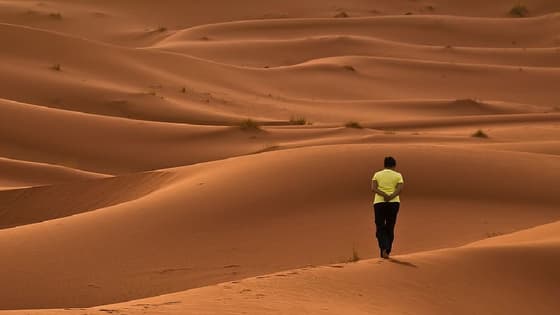
Deserts are some of the most fascinating environments on Earth. They are often thought of as hot, sandy places, but deserts can also be cold, rocky, or covered with ice. A desert is defined by its lack of rainfall rather than its temperature. Plants and animals that live in deserts have developed special adaptations to survive harsh conditions. For example, cacti store water in their thick stems, while many animals remain underground during the hottest parts of the day. Deserts are home to unique landscapes, including towering sand dunes, rocky cliffs, and dry riverbeds. Despite their dry appearance, deserts support a surprising variety of life. They also contain valuable natural resources such as minerals and oil. Human communities have lived in deserts for thousands of years by carefully managing water and adapting to the environment. Protecting desert ecosystems is important because they are fragile and play a significant role in maintaining the Earth’s natural balance and biodiversity for future generations.
Desert: you should know the environment very well
Before facing any adventure in the desert you need to be sure you know the environment. If you have not yet experienced a holiday like this, study well and also find out about the differences between the various deserts and the characteristics of each one, in the world. If you are already experts in this type of safari, you will still know that every desert is different from the other and therefore it is always right and convenient to get informed beforehand.
Sandy deserts have different elements from rocky deserts, grassy deserts such as tundras or steppes are different from volcanic deserts. This is why exploring themed sites, following expert explorers on social media or even government agencies that protect certain natural reserves and tell about their characteristics is essential. After that, you can physically organize the vacation.
Sandy desert: what to bring in your backpack?
In the sandy desert (Sahara, the most famous; but also the Gobi in Asia or the Great Sandy Desert in Australia) the heat is always very intense and is combined with the aridity given by the sand that makes the air dry. To face this type of desert, in your backpack, you need to pack: comfortable and long pants, hats (plus veils or scarves so to protect you from insects and dust), closed trekking shoes, sunglasses, sunscreen.
To this should be added: the sleeping bag and a jacket to face the evening (or the night) which in the desert is always very cold; compasses, GPS devices for the cell phone, wireless chargers, first aid kits against insect and snake bites. And obviously several water bottles and dry protein foods that will not be ruined by the heat.
Rocky and Volcanic Deserts: what equipment
If you are going through a rocky desert, such as the Grand Canyon in America, the Petra area in Syria, the Nullarbor in Australia, the equipment will be almost the same as in a sandy desert.
What you will definitely need in addition will be spare shoes (with rocks the soles wear out faster), first aid items to treat cuts and abrasions, a few extra heavy sweaters because rocky deserts, at night, give off much colder air. Walking sticks will also be useful, to help you on the impervious terrain. If you are going through a volcanic desert (for example, some areas of Etna in Sicily) you must make sure you have a GPS with you rather than a compass. In fact, some types of lava rock interfere with the magnets of compasses, making them useless.
Other types of deserts …
When you cross a grassy desert, the equipment will be similar to that of rocky deserts but with the addition of more heating elements (jackets, vests, wool blankets, equipment for lighting fires) because the humidity and cold here can always play bad tricks.
The situation is different for a frozen desert. In those cases the equipment will be totally different and certainly more specific (for example, mountaineering boots, thermic bottles, anti-freeze protective masks for the eyes, gloves, many more heating elements – such as special sleeping bags, and also portable shovels, ski poles, spare snowshoes).
Always valid advice
When you face a desert, the advice that is always valid, for any type of environment, is the same: always let someone (friends, hotel, embassy) know where you are going, what the itinerary should approximately be, what the expected destination is.
Always carry an alternative device (for example another cell phone, a tablet) to always be traceable, even if the first device is lost or broken.
Always carry extra drinks and food, in case an unexpected event leaves you without supplies in remote places.
Facing a desert is one of the greatest challenges a person can experience. To survive and overcome such an environment, a person must respect the desert’s power and understand how to move through it wisely. However, facing a desert is not only a physical challenge. It is also a mental battle. The vast emptiness and harsh conditions can create fear and loneliness. A person must remain calm, focused, and confident. Panic can lead to poor decisions, while patience allows someone to think clearly and find solutions. The desert teaches the importance of staying strong even when circumstances seem impossible.
The desert environment cannot be controlled, so people must adjust their actions according to nature. Traveling during cooler hours, seeking shade during the hottest parts of the day, and conserving resources are examples of adapting to the surroundings. Success comes not from fighting the desert but from learning how to exist within it. The desert also offers valuable lessons about simplicity and resilience. In a place where every drop of water and every moment of energy matters, people learn to appreciate basic necessities. The experience can reveal inner strength and show that humans are capable of enduring more than they often believe.
Ultimately, facing a desert requires preparation, courage, intelligence, and respect for nature. Whether it is a real desert or a difficult situation in life, the same principles apply. Challenges can seem endless, but with determination and careful choices, they can be overcome. The desert may be a place of hardship, but it can also become a place where people discover their own strength and ability to survive.
Reference airports for desert holidays
The closest airports to the main deserts famous in the world are certainly those of Morocco (Casablanca, Marrakech, Rabat-Sale) for the Sahara … Genghis Khan of Ulaan Batar for the Gobi … Las Vegas for the Grand Canyon.