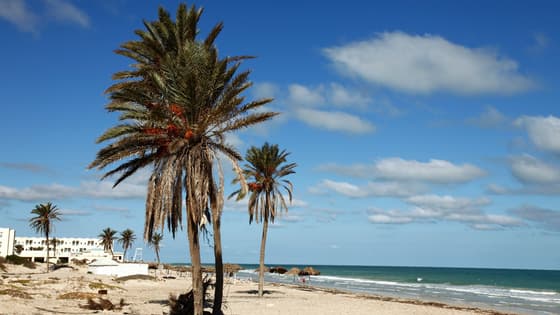
Tunisia is a famous tourist destination and everyone, in one way or another, knows or has known it. But when we talk about Tunisia, we usually think of the capital, Tunis, the seaside towns like Sousse, Hammamet, Sfax, Monastir, or the exciting desert destinations: Al Borma or Jebil National Park. Some also remember the most famous island, home to spectacular sea-view resorts: Djerba. But Tunisia offers numerous other islands, not necessarily “tourist paradises” but equally fascinating to discover. Whether you arrive at Tunis Carthage Airport (TUN) or Monastir Airport (MIR), thanks to Transfeero’s customized transportation—which also provides professional and experienced local drivers—you can reach your departure ports to discover these small, isolated worlds.
The islands of Tunisia
Besides Djerba and Kerkennah, the islands of Tunisia are very small. Many are just “rocks” and mostly natural paradises where only flora and fauna dominate the landscape. Humans only use them for a few hours, bringing groups of tourists and perhaps offering them the chance to stay overnight. So why focus on the islands instead of the rest of the country, rich in history and wonders? Precisely to savour the wild flavour of Tunisia and enjoy a few days truly far from the stress of the modern world.
The smaller islands of Tunisia are: the Kneiss archipelago, the islands of La Galite, Kuriat, Zembra and Zembretta and the rocks of Two Brothers, Kani, Flat Island and Pilau. Another important island for its nature and the beauty of its landscape is tiny Chikly, which lies in the center of Lake Tunis and is home to the ruins of an ancient fortress.
Large and “sweet” Djerba
Djerba (also known as “the sweet island”) claims the title of the largest island in North Africa, although it is so close to the coast—at the southern end of the Gulf of Gabes—that it doesn’t even seems an island. Without zooming in on the map, you won’t notice the tiny strait separating it from Al Jurf beach.
Contested for centuries by Arabs, Sicilians, and Spaniards, it has belonged to Tunisia since 1524, when the pirate Khayr al-Din “Red Beard” conquered it and made it his fortress. Today, it has a population of 140,000 inhabitants of Maltese and Berber descent, many of whom are Catholic. The island also hosts a synagogue due to the presence of a large Jewish community that coexists peacefully with other faiths. But above all, Djerba is a “vacation island”. Tourists love it and flock here between March and October, exploring its dream beaches, colorful markets, and monuments such as the Borj el-Kebir Fortress, the Folklore Museum, and the craft shops in the villages of Ajiim, El May, Fatou, Guellala. In Ghirba, you absolutely must see the synagogue, in Mahbounine you shall admire the gardens, and head to Midoun if you enjoy traditional dances! If you like snakes, you’ll find plenty of them at the Djerba Explore Park.
Kerkennah Islands
Off the coast of Sfax lie these islands, so close together they appear to be one. They are the Kerkennah Islands, made up of numerous rocks and two main inhabited lands: Chergui and Gharbi.
Chergui (meaning “east”) is the smaller of the two inhabited islands but also the more populous, home to most of the villages and the capital, Remla. Here, the itinerary will include the Heritage Museum, the ruins of an ancient fortress, and beaches so beautiful that it has earned the name “Tunisian Polynesia”.
Gharbi (“west”) is its twin, located just a few kilometers away. It is larger and famous for the palm groves and orchards that line its beaches. The town of Mellita offers the typical vision of an Arab village, though also modernized by tourism.
Protected Paradises
Four tiny archipelagos are now protected areas. The Tunisian government has declared the islands of Kneiss, La Galite, Zembra, and Zembretta as nature reserves.
The Kneiss islands are located in the Gulf of Gabes, but on the opposite side from Djerba. Besides being a paradise for migratory birds, they are home to seabeds rich in rare marine fauna. On the surface, archaeological ruins can still be seen, revealing traces of the scant human presence over the centuries.
La Galite is located off the northern coast of Tunisia. Inhabited by a few fishermen, it is rich in Mediterranean scrub and also offers spectacular seabeds and archaeological finds from the Roman and Carthaginian eras.
Zembra and Zembretta are located in the north and together form a protected Mediterranean biosphere national park. The largest island, Zembra, is still used today by the Tunisian army as a “guard post” and a site for land exercises.
The turtles islands
The Kuriat Islands are part of Tunisia’s tourist itineraries because they are located off the coast of Monastir and can be reached by boat from there or from Sousse. Famous for their marine life, they are a favorite nesting site for Loggerhead turtles. Given the beauty of their seabed and beaches, the islands are visited by an average of 25,000 people each year, which is why the government tries to balance the massive influx of tourists—in certain seasons—with the calm that protected animals deserve. The rules are very strict, here: it’s fine to have fun, but remember: nature comes first!
Chikly in the middle of the lake
The islet of Chikly deserves a special mention. It is located in the center of Lake Tunis, a beautiful saltwater lagoon located behind the capital, and is easily accessible; it is home to an ancient medieval fortress called Fort Santiago.
With roots dating back to Roman and Byzantine times, Fort Santiago served for years as a military bastion and prison. In modern times, it was also used as a hospital and customs quarantine station for foreign goods and passengers. Today, it is open to tourism and, thanks to guides on the island, visitors can admire the architectures and the remains of ancient mosaics immersed in the natural beauty of the lagoon. Indeed, 57 species of birds, including flamingos and falcons, come to rest here all the time.