Imagine planning a wonderful trip to South Africa, a vast nation at the “end of the world” where the reversed seasons (August is winter, January is summer) and unique wildlife always guarantee special experiences. What names immediately come to your mind? Cape Town, of course. Johannesburg, a second later. And perhaps some exotic names for the various enclaves where the original African tribes now live according to a federated system. South Africa is safari, social struggles, dream beaches, and above all, surfing along those terrible coasts—the Cape of Good Hope—where in the past many ships lost their hopes, instead, forever! But there is a less striking yet equally attractive South Africa. Let’s take you to Durban, for example.
Durban: far from everything
Durban Thekwini is a port city located on the east coast of South Africa, a six-hour drive from Johannesburg and a nine-hour drive from the enclave of Lesotho. Nestled in its own anonymous and quiet corner, this city of three million inhabitants is far from any traditional tourist itinerary. Much like Pretoria (the official capital of South Africa), it exists “but not too much,” and tourists certainly don’t choose it as a destination.
Cape Town is, of course, more spectacular, and Johannesburg more vibrant, but if you want to experience the true soul of a nation, you have to search deep beneath the surface, where no one looks, not on the surface. And Durban could be a good place to start. Besides… who says it’s less interesting than other South African cities?
Founded in 1497 by Vasco da Gama himself, who wanted to establish a port here for his ships, it truly developed in the 19th century when the English conquered much of the African continent. Unlike other cities, subjected to the rigid and racist laws of the Dutch Boers, Durban was always open-minded and welcoming. Inhabited by liberal Englishmen and Indian and Zulu immigrants, by the end of the 20th century it had become larger and more vibrant than Cape Town! Today, it is the second most populous urban center after Johannesburg.
What to see in Durban City?
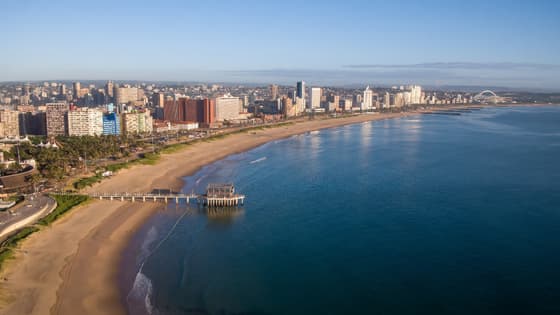
Durban overlooks the Indian Ocean and enjoys a subtropical climate, making it a prime beach destination, with beautiful beaches that are less crowded and expensive than those in Cape Town. Beyond its beaches, it’s famous for its cultural diversity and vibrant mix of traditions and tastes.
One of the city’s symbols is the Golden Mile, the famous promenade that stretches for several kilometers along the coast. This immense boulevard is perfect for walking, cycling, or simply relaxing while admiring the ocean. On one side, golden sands; on the other, restaurants, shops, and high-end hotels. Among the most famous beaches, North Beach and uShaka Beach are definitely worth mentioning. The latter is also home to a marine park and aquarium, uShaka Marine World , one of the largest in Africa. The Moses Mabhida Stadium is also located along the promenade. Besides being the temple of South African football, this stadium is open to tourists, who can climb to the top tier and enjoy breathtaking views of the city.
For those who wish to learn about local history and traditions, a visit to the KwaMuhle Museum offers an interesting overview of the apartheid era and the city’s evolution. The museum recounts Durban’s social transformations through documents, photographs, and testimonies that help understand South Africa’s past. Another interesting stop is the vibrant Indian Quarter, home to the largest Asian immigrant community in the city. Here, you’ll find the famous Victoria Street Market, a colorful marketplace where you can buy spices, fabrics, local crafts, and souvenirs. The area is also the ideal place to savor local cuisine, famous for “bunny chow,” a hollowed-out bread filled with spicy curry, considered one of Durban’s signature dishes.
Travel 30 kilometers outside the city, to the Inanda Valley, to follow a cultural itinerary called the Inanda Heritage Trail. This is where Mahatma Gandhi developed his philosophy of passive resistance, and the trail passes through the places where he lived and preached.
Nature trips
Those with more time can continue exploring the surrounding areas of Durban, rich in nature reserves and spectacular landscapes.
The KwaZulu-Natal coast offers opportunities for diving, boat trips, and dolphin and whale watching during the migration season. A short distance from the city are also nature parks where you can observe African wildlife in its natural habitat, such as the Tala Game Reserve, a protected sanctuary for over 300 bird species. And if you’ve already had a first taste of the city’s beauty by visiting the Botanical Garden, among tropical plants, palms, orchids, and plant fossils, you’ll certainly continue your exploration at the Hluhluwe Game Reserve, about a two-hour drive from Durban, where Africa’s most famous and beautiful animals—lions, tigers, elephants, and giraffes—can be admired, free in the wild, but in conditions of safety for all.
Other ideal places for exciting safaris include tours of PheZulu and Zulu Park.
Getting to and around Durban
Durban is truly remote from everything, so it relies on its own international airport (DUR), which receives flights from the major airports of Johannesburg (JNB) and Cape Town (CPT). After landing, you can rent a car, but since South African roads are never truly safe, it’s best to hire a chauffeur-driven transfer, so you can also have an expert local guide.
If you want to explore the surrounding area, however, it’s best to book a tour organized by one of the many indigenous agencies and tour operators. These companies often work directly with the tribes that live near the reserves and parks, ensuring highly experienced expedition leaders.
Safety: be careful
Despite the beauty of its beaches and natural parks, downtown Durban is not one of the safest places for tourists. Nothing dramatic or lethal, of course, but it’s good to know where to go alone and where it’s best to stay in a group or with a guide.
You better visit the neighborhoods north of the center, for example, only in the company of someone who knows how to deal with the problems associated with the local population. The city center is also a place for entertainment, especially on weekend nights, so it’s best to visit it during the day when there are fewer troublesome drunk people around.
The beaches are safe and well-monitored, although it’s always advisable to avoid going to the beach with jewelry and valuable watches! If you can, avoid swimming at night…not only because the ocean is not always calm and welcoming but also because, with the , surveillance on the beaches decreases and you can have unpleasant encounters.