
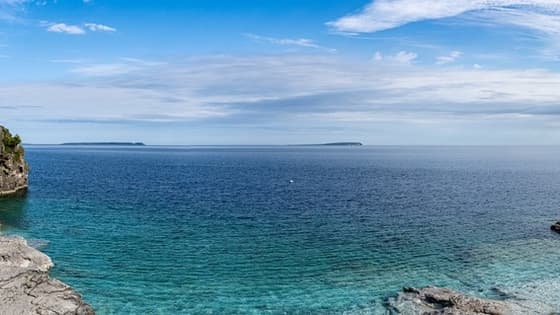
North American lakes, as we know, are truly “inland seas”. They are so vast that from one shore you can’t see the other. They compete for record with other, much larger lakes, such as the Caspian Sea in Asia, Lake Baikal, and Lake Victoria in Africa. Yet the record we are talking about is not found on the immense Lake Superior (the largest American lake), nor on the famous and endless Lake Michigan… but on the Lake Huron, in Ontario, Canada. And it is the record of Wasaga Beach, the “longest lake beach in the world”!
How to get there
To come and admire it, or stroll along it without limits of time or space, book your flight to Toronto Pearson Airport (YYZ). From there, with a convenient transfer arranged in advance, you’ll reach your destination in about an hour and a half, covering the 124 km that separate the beach from the airport.
Itinerary to the lake
The road to Wasaga Beach is paved with… wonders to admire! First of all, visit Toronto, the city that will welcome you. Colonial architecture (Casa Loma), futuristic architecture (Eaton, Art Gallery), numerous museums, and the beautiful Ripley’s Aquarium are just some of the city’s beauties. Not far from here lies the shores of Canada’s Niagara Falls. Traveling north with your transfer, you can easily reach them and then head towards Lake Huron, making your stop also in:
- Mississauga – originally a suburb of Toronto, it developed independently during the 20th century and gained “independence” in 1974. Locals are proud of the many parks that dot the urban area, but there are also several museums and art galleries, especially specializing in Indian art.
- Sciberras Road – a green street in the suburb of Markham, north of Toronto, captivates with its tranquil paths and the beauty of its simple architecture.
- Centennial Park – located just outside Toronto, this large park is full of quiet paths, picnic areas, and bodies of water.
- The Spirit Catcher – created by artist Ron Baird for an international exhibition, this large 21-meter-tall statue is based on an indigenous totem pole emphasizing the identity of Native Canadians.
- Big Bay Point at Lake Simcoe – located in the municipality of Innisfil, this panoramic viewpoint overlooks small Lake Simcoe, a foretaste of what you’ll see just a few kilometers further north when you finally reach your destination: Wasaga.
Wasaga: a 14 km “park-beach”
Wasaga isn’t just “a beach”. It is a 14-kilometer stretch of golden sand, the longest lake beach in the world. This uniqueness has led to its being declared a “protected reserve” and it is now a Canadian Provincial Park where anyone can enjoy the lake, sports, picnics, and a healthy outdoor lifestyle.
Wasaga’s main feature is its length, which allows it to welcome thousands of visitors and swimmers from Canada and abroad, during the summer. The shallow and generally calm waters of Lake Huron make it particularly suitable for families, unsteady swimmers, and those who want to spend relaxing days immersed in nature. Beyond the lake, fascinating natural landscapes unfold around it: dunes, forests, ideal habitats for numerous plant and animal species. In the immediate vicinity, you can also admire rock formations smoothed over time by the action of wind and the lake.
People enjoy Wasaga Beach by strolling, playing, biking, attending events, or simply waiting for the sunsets—which are spectacular here. Evenings on the beach are famous throughout Canada: the sun slowly sinks below the horizon, creating golden reflections on the water, offering one of the most beloved natural spectacles in the area. Afterward, people await the moonrise, listening to music, chatting, or even taking a nighttime dip in the lake. Even in the coldest months, Wasaga retains its charm. Winter transforms the landscape into a silent setting, ideal for snowshoeing, nature photography, and bird watching. Its proximity to the city of Toronto also makes the beach an easily accessible destination for an escape from urban life.
Wasaga Beach is a place where everything comes together harmoniously. Here, nature showcases the beauty of the Great Canadian Lakes and offers visitors an experience of space, freedom, and local traditions.
Wasaga and its lake
Lake Huron is one of the five Great Lakes of North America and represents one of the largest freshwater reserves on the planet. Located between Canada and the United States, specifically between the Canadian province of Ontario and the US state of Michigan, it is connected to Lake Michigan via the Straits of Mackinac. Along with the other Great Lakes, Lake Huron plays a fundamental role in the environment, economy, and history of the people who live near it.
With a surface area of approximately 59,600 square kilometers, Lake Huron is the second largest of the Great Lakes. Its waters reach a maximum depth of approximately 229 meters and contain numerous islands, including the famous Manitoulin Island, considered the largest lake island in the world. Its shores are characterized by highly diverse landscapes: sandy beaches, forests, cliffs, and tranquil bays that attract numerous visitors every year.
The lake’s name comes from the Hurons, an indigenous tribe who inhabited this region before the arrival of Europeans. For centuries, native communities have used the lake as an important communication route, a source of food, and a place for cultural exchange. Today, Lake Huron is a popular destination for recreational activities such as fishing, boating, camping, and nature tourism. At the same time, the lake continues to be economically important due to freight transportation and fishing activities.
