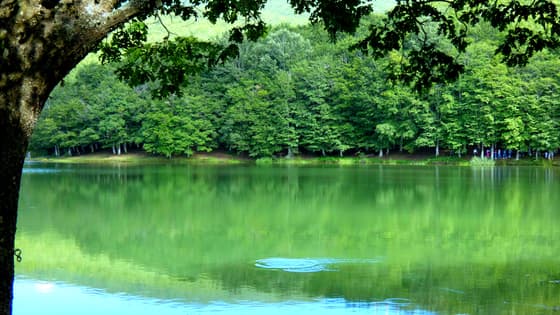
There’s a place in Australia that breaks away from the stereotype of “wide sandy spaces” typical of this island-continent. When we think of Australia, we imagine deserts or endless beaches, but we never consider the south, where green is the dominant color and the seasons are reminiscent of the gentle climate of England. The state of Victoria, whose capital Melbourne is one of the most famous cities in the world, is rich in mountains, forests, rivers, and lakes. Competing for the title of “Green State” is also the neighbouring island of Tasmania, perhaps even more “English” in terms of climate and nature.
Welcome to Victoria
If you explore the state of Victoria during these months, you’ll find everything but green. Our spring, in fact, corresponds to the Australian autumn and this region explodes with beautiful, warm colors. But you could book today for October, going to discover—precisely—the green spring of the south! Melbourne’s two main airports, Tullamarine International (MEL) and Melbourne Essendon (MEB), will welcome you with every convenient service possible. The city also has a third airport, Moorabbin, which is more suited to regional or local flights. From the airports, a tailor-made Transfeero transfer service will take you to many interesting locations in this lush state.
Cities of Victoria
Melbourne, the capital, is certainly the most precious pearl of the state of Victoria. Monuments, architecture, museums, theaters, nightlife… it has it all. Tourists are fond of the harbor markets, the Botanic Gardens, the Shrine of Remembrance, St. Paul’s Cathedral, the banks of the Yarra River, the St. Kilda district, and the beaches. Take a tour of the historic center aboard the colorful old-fashioned trams and then treat yourself to a day at the famous Melbourne Zoo.
Among the state’s fascinating cities, Geelong – Melbourne’s “next door” neighbour – certainly stands out, with its elegant colonial architecture overlooking, among parks and gardens, one of Australia’s largest and most beautiful waterfronts. Geelong is also the city of ice cream and sweets, according to a long-standing local tradition that continues to this day.
Ballarat, 115 km from Melbourne, is a classic town born around the gold rush. It still retains an ancient historic center, where every shop, color, sign and souvenir harks back to the days of the gold rush. In Bendigo, meanwhile, you can admire the religious temples (not only Christian) that adorn the old town, which grew up around a large mine. In the far north, Swan Hill (340 km from Melbourne) opens the door to the wild nature that forms the border between Victoria and New South Wales (the state of Sydney). Marking the border is the majestic Murray River, along whose banks wind forests, strange installations, and monuments to the history of the British pioneers.
Immersed in green
The state of Victoria boasts authentic ski resorts in the mountains they proudly call the Australian Alps! Located almost 400 km from Melbourne (a four-hour drive), these mountains only rise over 2,000 meters, but for a “flat” country like Australia, they’re certainly a source of pride! Skiing is possible in the winter at Falls Creek, Mount Hotham, and Mount Buller, while two national parks, Yarra National Park and Alpine National Park, offer spectacular trails immersed in wild forests.
At the foot of the Australian Alps, on Victoria’s east coast, lies a chain of lagoons, the Gippsland Lakes. The main town here is called—appropriately—Lakes Entrance, a tourist town that thrives on fishing and seafood farming. The impressive system of lakes, lagoons, marshes, and wetlands extends for 70 km, separating the towns from long, pristine beaches.
Another magical and green place to visit is Great Otway National Park. Here, amidst the forests, lies the magical Lake Elizabeth—formed by a landslide that breached the banks of an ancient freshwater lake, allowing the water to flood the forest below. Still today, you can admire the spectacular tree trunks emerging from the lake like giant needles.
Three must-see sites in Victoria
Not far from the Great Otway lies the scenic road that overlooks the sea stacks known as the “Twelve Apostles”, a natural monument par excellence and symbol of the state of Victoria! Smoothed over centuries by the ocean, these enormous rocks still defy the waves just a few miles off the coast.
Two other sites worth visiting, if you love the nature of this Australian region, are the saline lakes that, due to the long evolution of these lands, today lie far from the sea: lake Corangamite, for example, a gigantic basin of saline waters that rises in the center of the Plain of Volcanoes… a name that explains it all, even though today no trace of those volcanoes remains!
Another salt lake that is sadly disappearing, however, is located in the far north of the state: Lake Tyrrell, which retreats further each year, leaving behind stunning pink and orange salt crystals, especially beautiful at sunset!