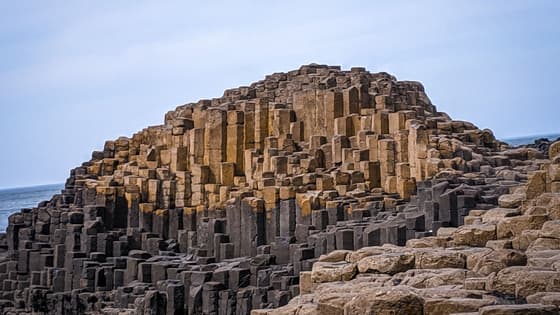
Que es el Camino de Gigantes? Algunos dicen que fue un enorme puente construido por un gigante para llegar al castillo de su rival, en Escocia, y matarlo; otros afirman, por el contrario, que fue el gigante irlandés quien desafió al escocés a cruzar el mar con él, lo que impulsó a su enemigo a construir un enorme puente de roca; y también están quienes cuentan la historia de un gigante enamorado que saltó sobre estos pilares de roca para alcanzar a su amada… Una cosa es segura: ¡esta calzada pertenece a los gigantes! Y la geología nos dice que, en efecto, fue un gigante real quien la creó… pero no un humano, sino un volcán. El Camino de Gigantes (Clochán an Aifir), en Irlanda del Norte, es, de hecho, la grandiosa erupción fisural de un volcán submarino generada por la separación abrupta de las placas tectónicas europea y americana hace millones de años. La lava emergió espesa y recta en fuentes de fuego que luego se enfriaron formando esta columna. Un lugar fascinante e increíble.
Visita el Camino de Gigantes
Pero no necesitas imaginación para llegar al Camino de Gigantes. Simplemente aterrice en el aeropuerto de Belfast (BFS) y tome un traslado desde allí, preferiblemente privado y con un conductor competente y experimentado, hasta su destino en poco más de una hora. Hay un excelente transporte público disponible, pero la ventaja de un traslado privado en esta región de Irlanda del Norte también garantiza rapidez en carreteras difíciles para los turistas.
El acceso al sitio es de 6:00 a 20:00, y el precio de la entrada oscila entre 16 libras para un adulto (8 libras para niños) y 40 libras para familias, con un descuento de 24 libras para familias compuestas solo por adultos. Dada la posibilidad de cambios de precio y horario, siempre es recomendable consultar la página web del National Trust (https://www.nationaltrust.org.uk/visit/northern-ireland/giants-causeway) y, sobre todo, reservar su visita con suficiente antelación.
¿Qué verá a lo largo de el Camino de Gigantes?
Descubierta a finales del siglo XVII por un explorador naturalista y ya una atracción turística en el siglo XVIII, el camino del Gigante fue declarada Patrimonio de la Humanidad por la UNESCO en 1986.
Desde el Centro de Información, podrá seguir a sus guías en itinerarios que pueden durar hasta un día completo. Admirará las formaciones columnares del Gran Camino, la roca conocida como la Bota del Gigante, la Silla de los Deseos, donde podrá sentarse en las enormes rocas para contemplar el mar y soñar, el Acantilado del Camello, con su encantadora joroba, el Gran Órgano, que se asemeja a un órgano de tubos, y el Camino Superior, que le llevará por la cima más alta del acantilado para disfrutar de una vista espectacular.
Durante el recorrido, un guía experto también le mostrará la belleza de la flora y fauna local: las numerosas aves migratorias que hacen escala aquí a lo largo de las estaciones, los singulares lagartos y las mariposas de color cobre. En el mar, durante ciertos meses del año, ¡podrá observar decenas de familias de delfines!
Castillos cercanos
Comience su recorrido en Bushmills, el pueblo en cuyo municipio se encuentra el camino. Famoso por sus destilerías y su arquitectura de piedra negra, es un lugar tranquilo, perfecto para unas vacaciones de verano. No muy lejos de Bushmills se encuentra el Castillo de Dunluce, uno de los sitios históricos más evocadores de Irlanda del Norte. Ubicado en la costa del Condado de Antrim, se alza sobre un espectacular acantilado con vistas al Océano Atlántico. Sus orígenes se remontan a la Edad Media, pero el castillo fue ampliado en el siglo XVI por la familia MacDonnell, que lo transformó en una importante fortaleza. Hoy en día, sus ruinas narran la historia de siglos de batallas, leyendas y vida medieval. ¡Una de las historias más famosas cuenta cómo parte de la cocina se derrumbó en el mar durante una tormenta! El castillo sirvió de escenario para la serie de televisión «Juego de Tronos». Visitar Dunluce significa sumergirse en la historia y la magia de la antigua Irlanda.
El Castillo y los Jardines de Glenarm, ubicados en el Condado de Antrim, son un lugar rico en historia y encanto. Construido en el siglo XVIII por la familia McDonnell, el castillo conserva elegantes estancias y vestigios de su pasado aristocrático. Los jardines, entre los más antiguos de Irlanda, ofrecen espléndidos paseos entre flores, árboles centenarios, invernaderos y rincones pintorescos. Son especialmente famosos los tulipanes de primavera y las colecciones botánicas meticulosamente conservadas. Hoy en día, Glenarm es un destino muy apreciado por los visitantes, donde naturaleza, cultura y tradición se fusionan en una atmósfera evocadora.
Puentes y templos
Carrick-a-Rede es una pequeña isla situada frente a la costa de Ballintoy. Su encanto agreste se complementa con el puente colgante de cuerda que conecta su cima con tierra firme, un paseo que muchos turistas aventureros disfrutan tanto por su interés cultural como por el reto personal que supone.
Cerca de Londonderry, el Templo de Mussenden se alza cerca de la playa de Downhill, en un lugar espectacular sobre un acantilado con vistas al océano Atlántico. Fue construido en 1785 por el obispo conde Frederick Augustus Hervey como biblioteca privada, inspirado en el Templo de Vesta en Tívoli, Italia. Su estructura circular, con columnas de estilo clásico, crea un fascinante contraste con el paisaje agreste que lo rodea. Su nombre proviene de Frideswide Mussenden, prima y querida amiga del obispo. Con el tiempo, el templo se ha convertido en un símbolo de la costa irlandesa y actualmente está gestionado por el National Trust. Su ubicación privilegiada, su historia romántica y su elegante arquitectura lo convierten en una de las atracciones más visitadas de la región.
Más para visitar…
Ballycastle es un pueblo costero con encanto tradicional que fue el escenario del descubrimiento de Guglielmo Marconi. De hecho, el famoso científico italiano envió una de las primeras señales de radio desde aquí, transmitiendo desde Ballycastle a la isla de Rathlin. El pueblo alberga fascinantes festivales culturales, especialmente en verano.
El Sendero de Gobbins es un espectacular sendero costero situado a lo largo de la costa de Islandmagee. Construida originalmente en 1902, ofrece una experiencia única entre imponentes acantilados con vistas al mar, puentes metálicos y cuevas naturales. El sendero recorre los acantilados de basalto con vistas al mar de Irlanda y ofrece a los excursionistas vistas impresionantes. Diseñada por el ingeniero Berkeley Deane Wise, fue una importante atracción turística en la época victoriana y hoy representa uno de los paseos más evocadores de Irlanda del Norte.
Eventos al Camino de Gigantes
El camino del Gigante es mucho más que un espectacular paraje natural. Aquí también se celebran eventos culturales y deportivos que muestran la belleza de la zona y los pueblos de los alrededores. En otoño, por ejemplo, tiene lugar la Maratón Costera, donde los atletas «desafían a los gigantes» corriendo sobre las columnas de roca.
Otro evento benéfico es la Mighty Jike (Caminata Poderosa), una ruta de senderismo aventurera que siempre incluye el acantilado de lava. Además, abundan las ferias de artesanía, los conciertos y las exposiciones de arte, que comienzan en los pueblos cercanos y también muestran el acantilado en todo su esplendor