
“I followed my heart, and it led me here”… “From my office window, I see wonders”… “We dug with our feet and built a nation”. These are just a few of the phrases that have inspired writers—famous or not —after visiting Singapore, or after being born and raised there. How much beauty radiates from a place that inspires words like these? To find out, you simply must come to Singapore, an island nation located at the southernmost tip of Asia—an appendage of the continent, a droplet poised to fall into the Indian Ocean, yet—fortunately for us—it never does!
You don’t just “pass through” Singapore
Many travelers say they have “passed through Singapore.” Indeed, its international airport, Singapore Changi (SIN), is a major hub for intercontinental flights between Europe and Japan, as well as for direct flights to Australia. People do arrive here for a stopover, it is true, but no one can resist the temptation to step outside, even briefly, to get to know the island—and to discover the secrets of its beauty.
The fact is, one shouldn’t merely “pass through” Singapore. You should stop and explore it. It does not matter if it is small and densely populated; it is always worth the visit. Numerous public transport options and private chauffeur-driven vehicles—such as our own service—depart from Changi Airport, ready to whisk you across this small nation in no time.
The story of an island nation
Singapore is one of Southeast Asia’s most fascinating destinations—a city-state where modernity, Asian traditions, nature, and futuristic architecture coexist in perfect harmony. As early as the 3rd century AD, the extraordinary tale of a mysterious « island at the end » (this is the meaning of its first Chinese name, Pulau Ujong) circulated throughout Asia.
Ten centuries later, around 1290, a kingdom already existed on this island—a kingdom said to have been conquered thanks to the auspicious omens brought by a lion (hence the name Singapore, meaning « Lion City »). Although contested by powers from both Java and Sumatra, the Kingdom of Singapore managed to endure until the 17th century, when the island fell into the hands of European conquerors.
The Portuguese, the Dutch, and finally the British all left their mark on this place. In the post-World War 2 era, Singapore became part of the Federation of Malaysia. However, due to disputes with the federal parliament, the island was expelled and has been an independent nation since 1965.
Symbols of Singapore
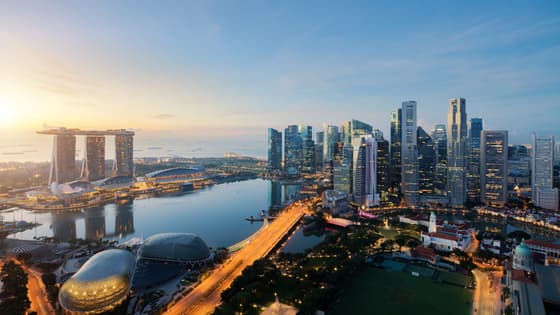
While Singapore’s official symbol is the lion—perfectly embodied by the Merlion statue (a half-lion and half-fish creature)—its tourism icon is undoubtedly Marina Bay, the area that best showcases the city’s skyscraper-filled skyline. Here stands the famous Marina Bay Sands complex, featuring three towers topped by a massive structure shaped like a ship (or a surfboard). This three-tower complex dominates the bay, which is dotted with numerous other noteworthy buildings. In total, the city skyline boasts 4,000 skyscrapers, yet standing out amidst this « forest » of towers are Republic Plaza, Millenia Tower, Orchard, Suntec City, and The Pinnacle…
Another important symbol of Singapore is Chinatown. To discover the city’s more traditional side, it is worth spending a few hours in this neighborhood; it preserves important traces of the history of Singapore’s Chinese community and is perfect for exploring on foot.
Key attractions include the Buddha Tooth Relic Temple, notable for its ornate architecture, and the Chinatown Street Market, where you can buy souvenirs and local products, as well as sample Asian culinary specialties. One of the must-do experiences in Singapore is stopping at a « hawker centre »—a food court where numerous vendors offer traditional dishes at affordable prices.
Little India and Kampong Glam
Singapore is a multicultural city, and its historic districts offer some of the most fascinating glimpses into this diversity. In Little India, you will find colorful temples, spice shops, Indian restaurants, and bustling shopping streets. The neighborhood is particularly delightful to visit during traditional festivals, when decorations transform the streets.
Not far away lies Kampong Glam, the district associated with the Malay and Muslim communities. Its main landmark is the Sultan Mosque, easily recognized by its large golden dome. The area is also famous for Haji Lane, a street filled with murals, independent boutiques, bars, and cafés.
Exotic Gardens
Gardens are a must-see in Singapore. The city boasts « well-tamed » wild nature in the form of parks and reserves, all of which are fascinating to visit.
Gardens by the Bay, for instance, is one of the city’s most innovative projects. The park is best known for its Supertree Grove—giant, tree-shaped structures that soar to impressive heights and are illuminated at night by spectacular light displays. Gardens by the Bay also houses two massive conservatories: the Flower Dome and the Cloud Forest. The latter features a towering, vegetation-covered mountain and a dramatic waterfall. It is an ideal stop for those wishing to discover Singapore’s greener, more innovative side.
The Botanic Gardens feature a dedicated section showcasing some of the world’s most beautiful and rare orchids. The Singapore Zoo is also well worth a visit, home to over 3,000 animals, including natural wonders such as the white tiger and Komodo dragons.
Sentosa Island
Singapore is a vast city concentrated on an island nation, yet its attractions extend well beyond the boundaries of the urban center. Beyond the city limits, you can also reach unique spots like Sentosa Island. Located right next to the main island, this stretch of land offers beaches, family-friendly attractions, sports activities, and theme parks.
Sentosa is the perfect place for a more relaxed day after exploring the city’s museums, neighborhoods, and skyscrapers. You can mix some beach time with the many activities available on the island.
When is the best time to visit Singapore?
Singapore can be visited year-round thanks to its tropical climate, characterized by high temperatures and humidity. The weather can change quickly, so it is always a good idea to carry a lightweight umbrella. To make the most of your trip, it is also worth checking the calendar of events and holidays, which can add an extra layer of interest to your experience.
Why is a holiday here always worth it?
Generally, 3 or 4 days are recommended to discover Singapore’s main attractions. An itinerary like this allows you to dedicate one day to Marina Bay and Gardens by the Bay; another to Chinatown, Little India, and Kampong Glam; a third to Sentosa; and a final day to museums, shopping, gardens, or culinary experiences.
Singapore is a compact, efficient destination that is easy to explore thanks to an extensive public transport network. By planning your days well, you can alternate between famous landmarks and lesser-known neighborhoods, discovering a city that surprises visitors with its ability to blend the future and tradition.
A holiday in Singapore is always worth the trip and the cost. Not only does it offer memorable experiences that are all within easy reach, but it also serves as a fascinating stopover during longer journeys. So, if you are traveling to Japan or Australia and have a layover in Singapore, consider catching your connecting flight two or three days later—and enjoy the island worry-free!
