
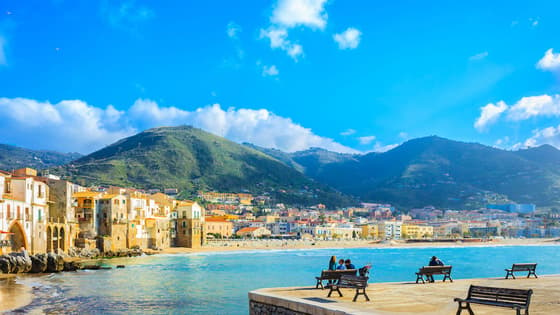
Sicily is the largest island in the Mediterranean Sea and one of Italy’s most beautiful regions. It is famous for its stunning beaches, ancient ruins, delicious food, and rich history. Mount Etna, Europe’s largest active volcano, is one of its most impressive landmarks. Visitors can explore historic cities such as Palermo, Catania, and Syracuse, each offering unique architecture and cultural traditions. Sicily is also known for traditional dishes like arancini, pasta alla Norma, and cannoli. With its warm climate, beautiful landscapes, and welcoming people, Sicily is a wonderful destination for travelers who want to experience nature, history, and authentic Italian culture. If you too are ready to experience this adventure in Sicily, here are some tips on how to face the trip on the island, before and after your arrival at the port of Messina, or at the international airports of Catania (CTA) and Palermo (PMO).
Travel documents
Those who live in one of the countries in the Schengen Agreement area can enter Italy by only showing an identity document – passport or identity card from their own country. If you arrive from a “non-Schengen” nation, you must show a passport that is valid up to three months after the date of your arrival.
Some countries in the world need a visa requirement, even for a simple holiday in Italy. Find out on the appropriate website if your country is included in the list of mandatory visas. Bring with you the document that will be issued to you at the hotel or B&B after registration. That too is valid as an identification document to move around the territory. Travel and/or health insurance is recommended but not mandatory.
What to pack for your trip to Sicily?
You can always come to Sicily, in every season. But remember that in autumn there are weeks of very intense rains. And between January and February temperatures can drop even close to zero and bring freezing days.
Basically, your suitcase can contain short-sleeved dresses, short trousers and skirts, longer but still light dresses. Jackets are recommended, especially in spring and in the final part of summer, due to the sudden cool breezes in the evening. Comfortable shoes are a “must”, because you have to walk a lot!
Get good information apps on the means of transport, on your mobile phone. If you don’t rent a car, buses are ideal for getting around the island. In Sicily there are several efficient bus companies. The best are SAIS, Etna Trasporti and AST. Obviously… don’t leave your cameras at home!
What will you see and visit
Sicily is a beautiful island, famous for its history, landscapes, beaches, and delicious food. There are many interesting places to visit and things to see.
One of the most famous sights is Mount Etna, the largest active volcano in Europe. Visitors can go up the mountain and enjoy amazing views of the surrounding countryside and sea. Near Etna, you can also visit the city of Catania, which has beautiful old buildings and lively streets, the Alcantara Gorges and the seaside towns of Taormina and Aci Trezza. In Palermo, the capital of Sicily, you can see impressive churches, historic buildings, and colourful markets. The Palermo Cathedral and the Norman Palace are two of the most popular attractions. Another important historical site is the Valley of the Temples in Agrigento, where you can see ancient Greek temples that are thousands of years old. Do not forget to visit the baroque towns: Noto, Ragusa, Modica . Sicily is also famous for its beautiful beaches. Giardini Naxos is a popular one, but also Riserva dello Zingaro, Marzamemi, Scala dei Turchi and Milazzo are. Another beautiful place to visit, and also full of ancient Greek ruins you can admire, is in Syracuse.
Finally, Sicily is a great place to relax. You can swim in clear blue water, enjoy the sunshine, eat fresh seafood, and taste famous dishes such as arancini, pasta alla Norma, and cannoli. Sicily offers something for everyone.
What to do and NOT to do in Sicily
There are millions of things to do and see in Sicily, and you will be spoiled for choice. But some are almost mandatory! Paraphrasing a very “colorful” old saying: you cannot see Palermo if you do not see Monreale as well. So you cannot visit Catania if you do not dedicate at least half a day to Mount Etna! A must also admire the Valley of the Temples of Agrigento, the eighteenth-century Baroque architectures – on a wide route that goes from Scicli to Ragusa to Noto up to Syracuse and Acireale. If you are in Palermo, the Cathedral is unmissable, but so is Monreale, as we said. Do not miss also a visit to Erice and then you can relax at one of the beaches of the Zingaro Nature Reserve.
If you want to aim for the smaller islands, however, sacrifice other locations and dedicate yourself to discovering only those ones. Favignana, Levanzo, Lipari, Salina, Stromboli … they are many and all wonderful.
What must you never do in Sicily? Never venture into the historic areas of big cities on your own in the evening. Always move in groups and possibly remain in crowded areas. The old towns’ areas are best visited during the day, with a good guide by your side. Don’t trust anyone who tells you: “Get in my car, I’ll take you there!” especially if this happens on the street. There are many good and generous people in Sicily, but also many others ready to take advantage of you. Do not eat fish in the first trattoria you come across, find out about the best restaurants with good ratings.
Do not venture on your own on Mount Etna! This is not only an impervious mountain, it is also an active volcano with dozens of very dangerous “natural traps”. If you travel through the territory of the volcano, always tell your hotel/BB where you are and when you plan to return. If you can, don’t buy souvenirs in super famous places! Maybe move a few kilometers further and look for a local memory over there: it will certainly be much cheaper.
